In our previous guide, [🔗 Part 16. Bicycles & E-Scooters in Seoul: Why We Discourage City Riding & The Perfect Leisure Guide], we explored how to ride bicycles and e-scooters across the city center and Hangang River Park.
In this part, we will explore Seoul’s brand-new water “public transit,” the Hangang Bus, which travels directly on the Hangang River.
1. What is the Hangang Bus? (Features & Transit Transfers)
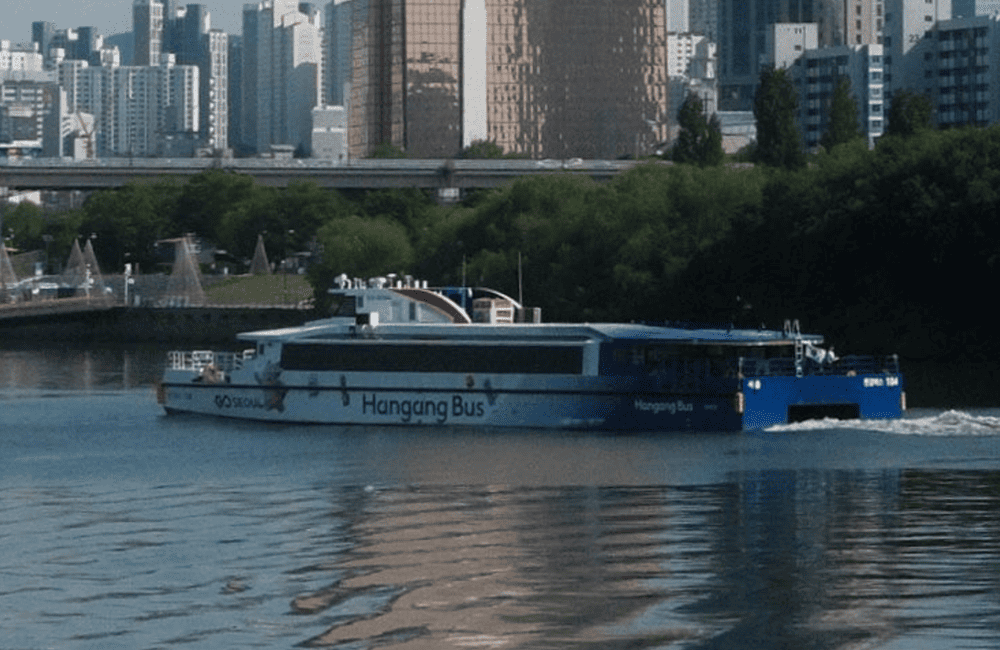
Officially launched in September 2025, the Hangang Bus is an official public transit system operating as a Passenger Boat across the Hangang River.
Its biggest advantage is that it offers transfer discounts with subways and city buses, allowing you to cross the city center completely traffic-free, unlike Seoul’s heavily congested roads.
2. Main Docks and Operating Routes
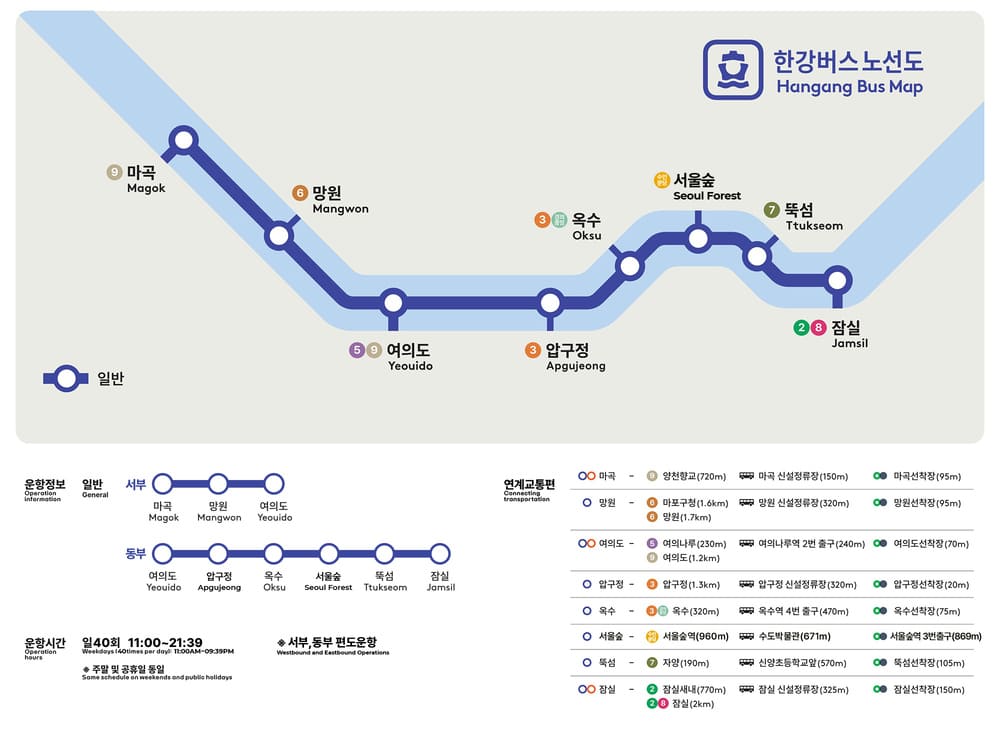
The Hangang Bus operates across 7 key locations in Seoul. Please refer to the official map and schedule below for detailed stops.
- 📍 7 Key Docks: Magok – Mangwon – Yeouido – Apgujeong – Oksu – Ttukseom – Jamsil
- ⏰ Operating Hours: Runs 40 times a day from 11:00 AM to 9:39 PM. It operates on the exact same schedule even on weekends and public holidays.
[Source: Official Hangang Bus Website]
3. Ticketing and Boarding Procedures
Although it’s called a “bus,” it is ultimately a passenger boat with a strict capacity limit. You cannot just tap and board immediately like a subway. You must follow this procedure:
- 🎟️ Get a Waiting Ticket: Distribution starts 1 hour before departure. As soon as you arrive at the dock, go straight to the staff or the gate, state your destination, and grab a numbered waiting ticket.
- ⏳ Wait & Check Remaining Seats: After securing your ticket, wait nearby. You can check the remaining seats or sold-out status in real-time on the whiteboard placed in front of the gate.
- 💳 Tag & Board: Return to the boarding gate 10 minutes before departure. Lightly tap your transit card on the terminal located on the right side of the turnstile to enter.
💡 Local Survival Tip
On weekends and public holidays, the heavily tourist-populated ‘Yeouido Dock’ runs out of waiting tickets very quickly. If you plan to board from Yeouido, we highly recommend arriving at least 15 to 20 minutes earlier than usual to secure your ticket.
4. The Local Reality Check: Expectations vs. Reality
It is a new and attractive transit option, but as a local, there are a few realistic downsides and essential tips you must know before riding.
- ⚠️ Initial Service Instability: Since the service is still in its early stages, minor system issues or delays occasionally occur. We advise against using this for tight, time-sensitive schedules.
- 🚧 Inconvenient Transfer Routes & Ttareungi Hack: Because it operates on the river, the docks are surprisingly far from subway stations on foot. However, there are public “Ttareungi (Seoul Bike)” rental stations right next to every dock! We highly recommend riding a bike from the subway station to the dock.
- 💡 Conclusion – An Unbelievably Cheap Sightseeing Cruise: If you view this purely as a fast commuter transit, you might be disappointed. But if you treat it as an incredibly affordable sightseeing cruise where you can enjoy the beautiful scenery of the Hangang River for just 3,000 KRW, it offers the ultimate satisfaction.
👉 Next UP: Have you mastered Seoul’s public transit? In our next guide, [🔗 Part 18. A Practical Guide to Renting a Car in South Korea: Choosing a Vehicle & Driving Rules], we will break down everything you need to know to escape the city, from International Driving Permits to surviving Korea’s complex road systems. Stay tuned!