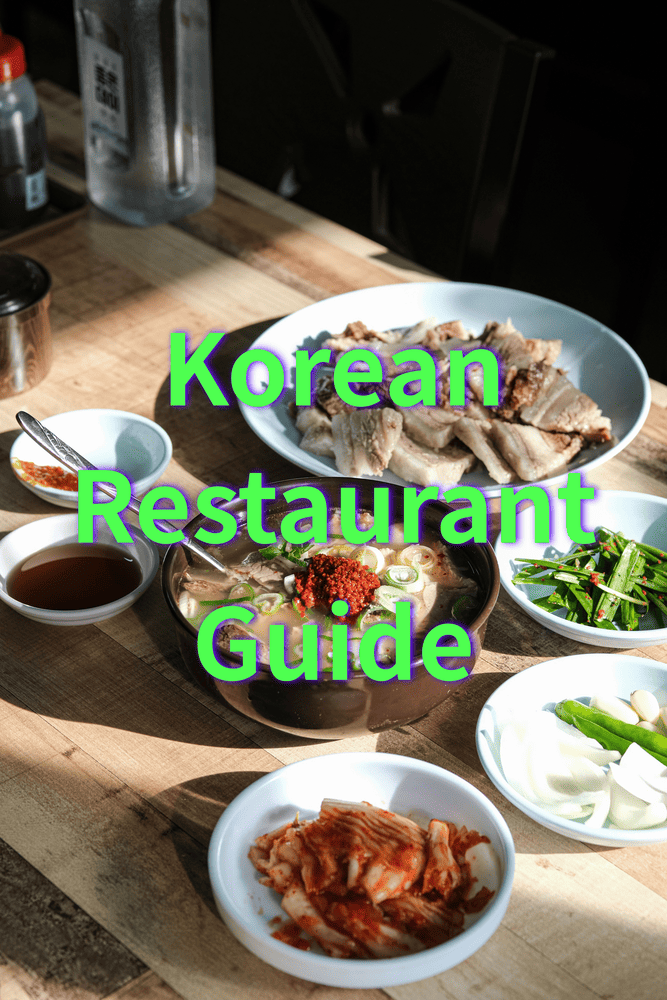
Food is undoubtedly the highlight of any trip to Korea! But once you step inside a local restaurant, it’s easy to get flustered by unfamiliar menus, call bells, hidden cutlery, and unique dining cultures.
Generally, at Korean restaurants, you choose and order individual main dishes. However, some places offer an “All-You-Can-Eat” (AYCE) system for a set price. These two types of restaurants have completely different systems, from table settings to how you order.
In this post, we’ll first completely master the essential tips for using standard, general restaurants! (For a guide on AYCE restaurants, please check out the next part.)
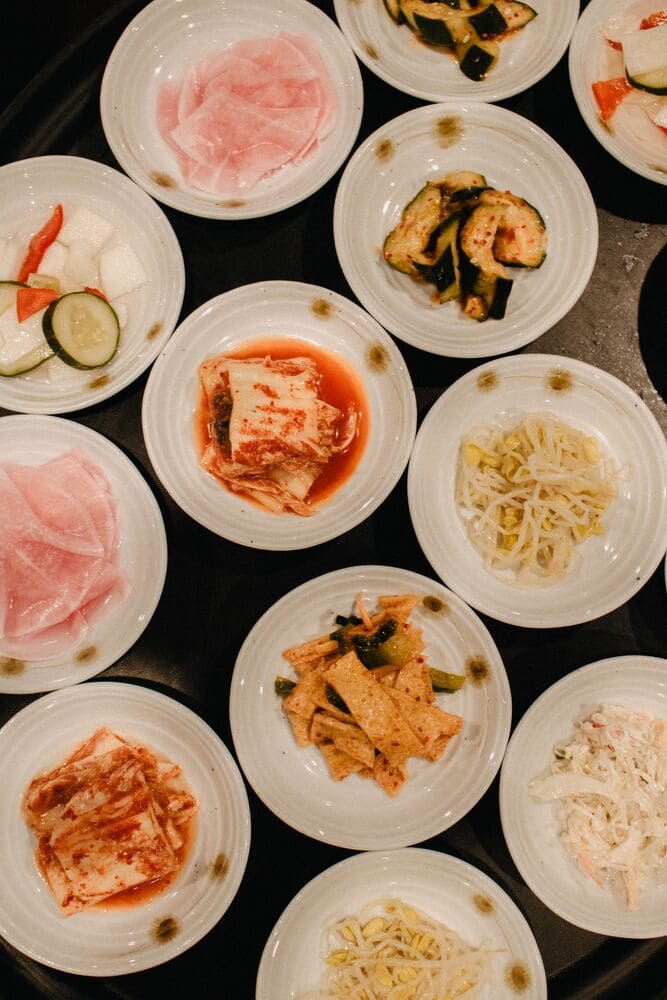
1. How to Order: Staff for the First Order, ‘Call Bell’ for Additions
- 💁 First Order: When you take a seat, just like in Western restaurants, a staff member will usually come over to ask how many people are in your party and kindly take your first order.
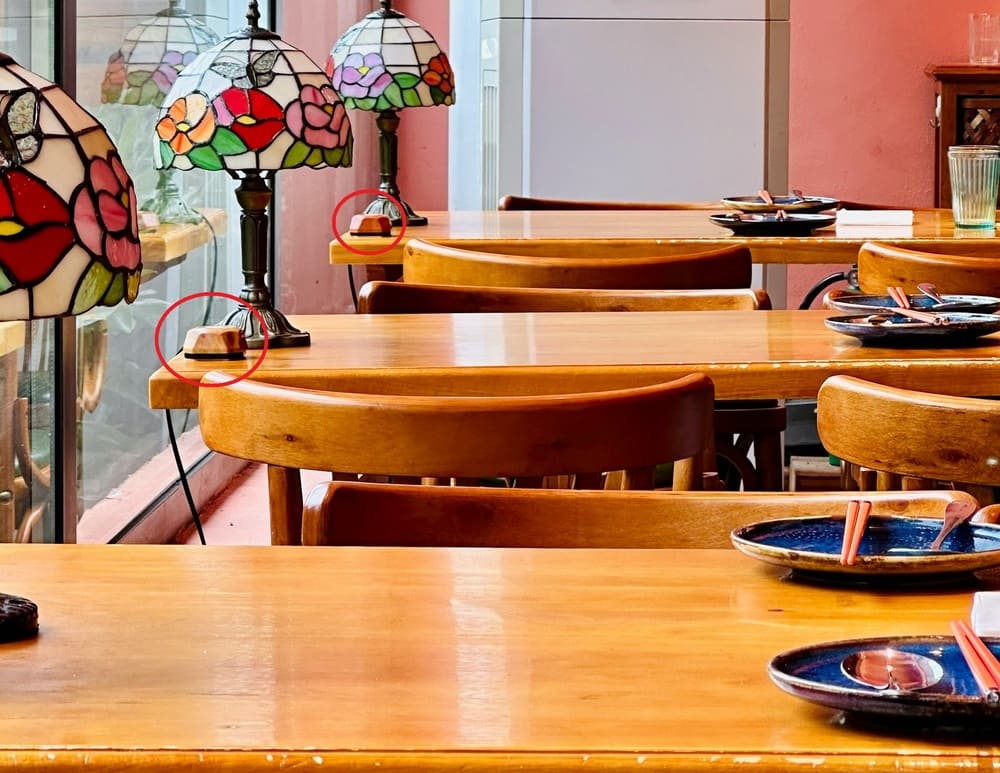
- 🛎 Additional Orders via ‘Call Bell’: When you want to order more food while eating, there’s no need to try and catch a waiter’s eye or feel lost. Simply press the ‘Call Bell (Call Button)’ attached to the side of the table or on the wall, and a staff member will come running right away.
💡 Pro Tip: What if the staff doesn’t come or there is no call bell?
- When It’s Busy: If the restaurant is super busy and no one comes to take your first order after you sit down, don’t just wait endlessly. Feel free to press the ‘call bell’ on the table to call a staff member!
- Raise Your Hand: Small, traditional local restaurants might not have call bells on the tables. In this case, don’t panic. Just lightly raise your hand toward the staff and call out, “Excuse me! (Yeogi-yo!)”
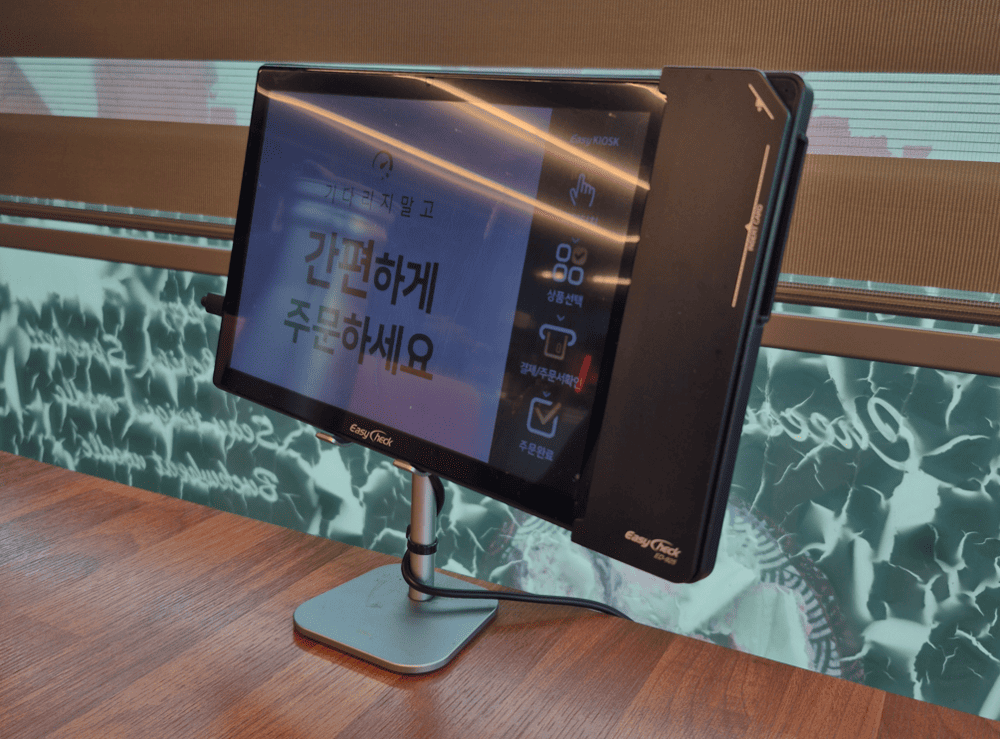
- 📱 What if there’s an ‘Ordering Tablet’ on the table?: Recently, many Korean restaurants have installed an ‘Ordering Tablet (T-Order)’ at every table. In this case, you don’t need to call the staff. Just like a fast-food kiosk, you simply touch the screen to choose your menu and place your order.
- 💳 Payment Tip: If you look at the right side of the device, there is a card reader attached. For ‘Pre-paid’ restaurants, your order is only complete once you insert your card here and pay directly after adding items to your cart!
2. Cutlery and Napkins are in the ‘Table Drawer’! (feat. Scissors & Tongs)
- 💧 Water and Cup Setting: When you sit down, a staff member will mostly bring a bottle of cold water, or set up a water bottle and cups together. If they only bring a water bottle, the cups are usually already prepared on the table, so just look around.
- 🥢 Location of Cutlery and Napkins: In many cases, cutlery (spoons and chopsticks) and napkins are not placed on top of the table. Don’t panic, and simply pull open the drawer on the side of the table! The cutlery and napkins are neatly tucked inside, so you can take them out and set the table yourself.
- ✂️ Scissors & Tongs: Inside the drawer, you will only find standard cutlery. If you order food that needs to be cut, like pork belly (Samgyeopsal) or cold noodles (Naengmyeon), the staff will bring scissors and tongs on a tray when the food is served.
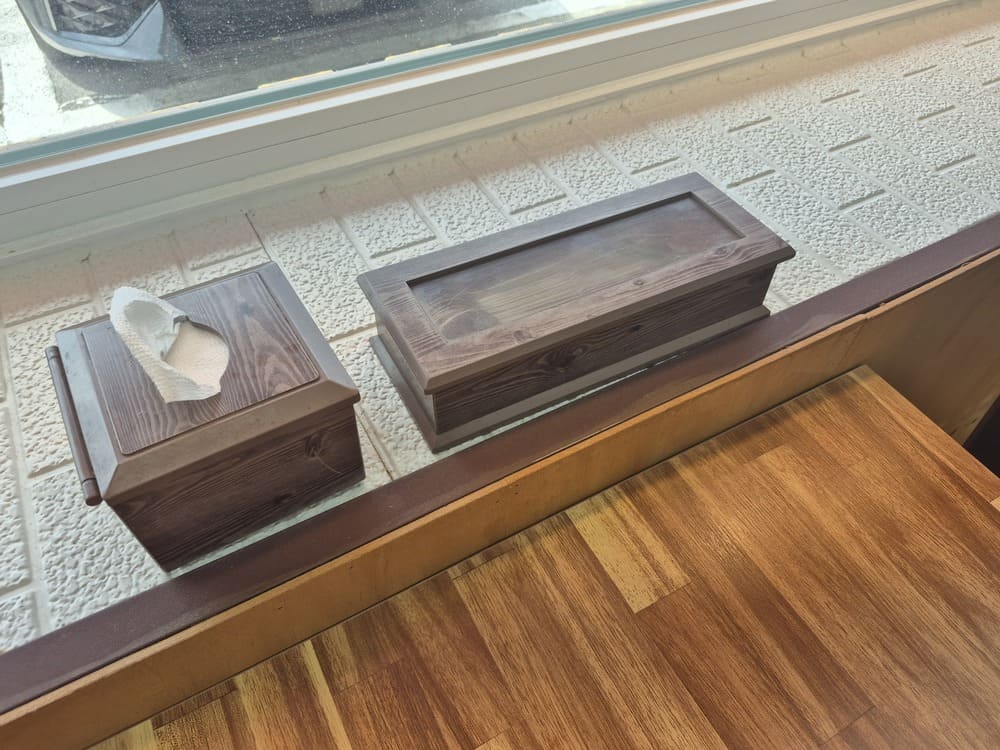
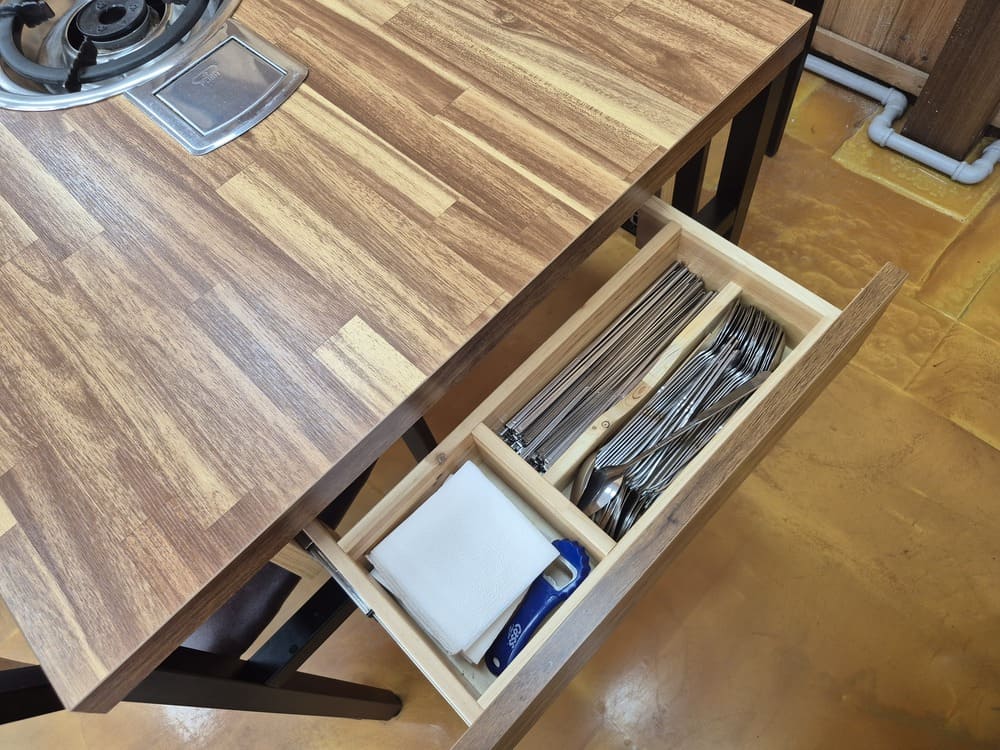
✂️ [Unique K-Food Experience: Scissors on the Dining Table
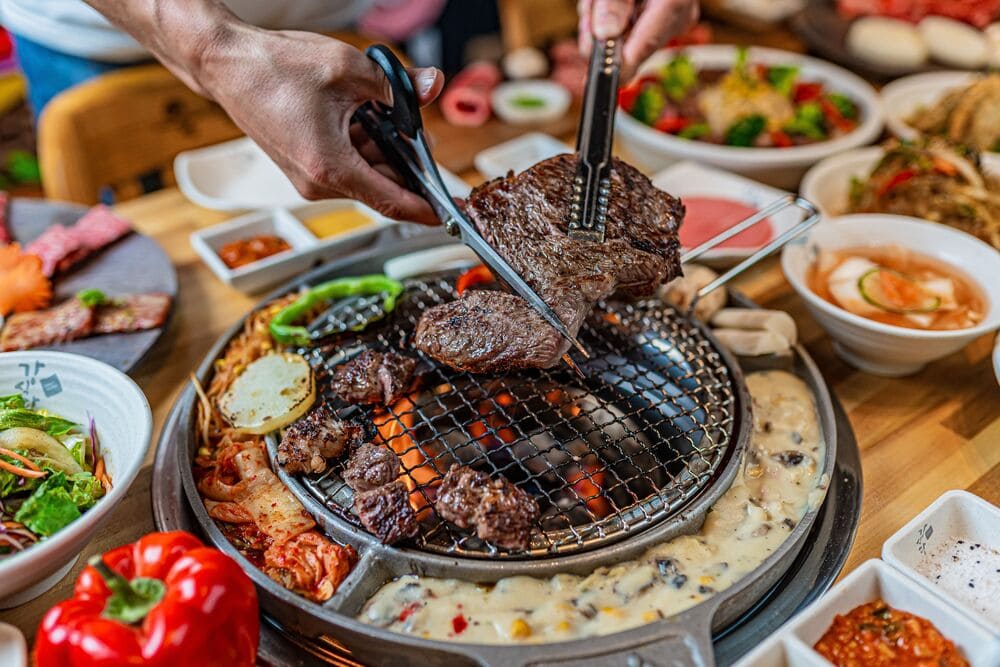
In Korea, scissors are commonly used to cut meat and other foods. Using scissors to cut your food at the dining table might look a bit strange at first, but it is a natural culture that has been around in Korea for a long time. Take this opportunity to cut your food with scissors yourself and enjoy a unique cultural xperience!
3. How Food is Served: Ready-to-eat vs. Cook-at-table
Korean restaurants generally bring you fully cooked and finished dishes from the kitchen. However, menus like stews, soups, and the widely known pork belly (K-BBQ) must be cooked directly by you on a fire (portable stove or grill) right in the middle of the table.
- 🍲 Ready-to-eat: Menus like Bibimbap, Bulgogi, and cold noodles come perfectly cooked from the kitchen. You can eat them right away as soon as they are served on the table.
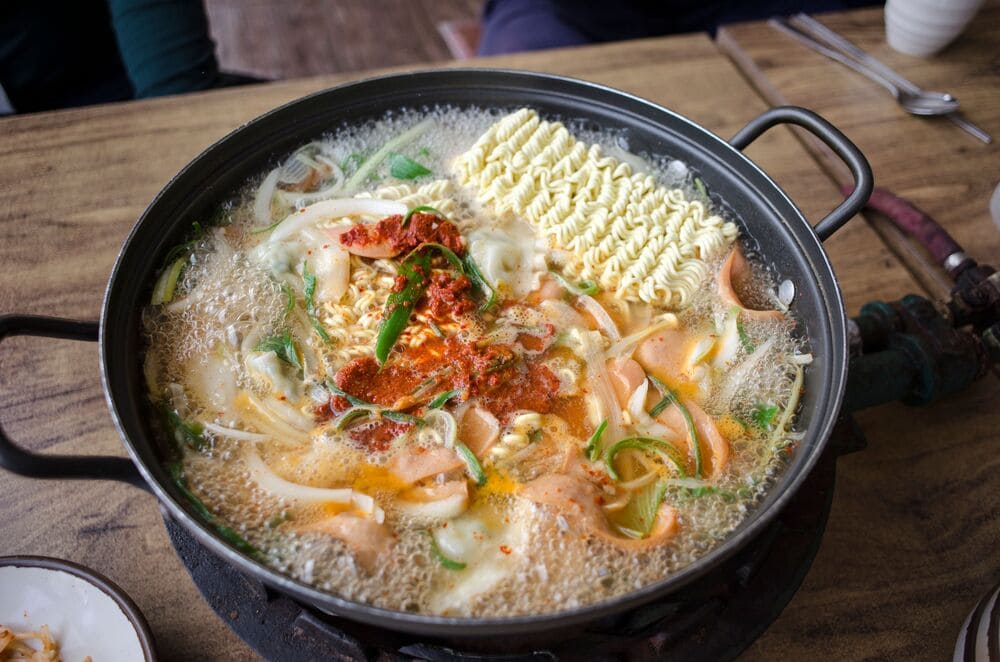
- 🔥 Cook-at-table: Menus like Budae Jjigae (Army Stew), Jeongol (Hot Pot), and grilled pork belly are dishes you boil or grill yourself at the table. Usually, the staff will turn on the heat for you while setting up the food, so you don’t need to worry too much about how to cook it. For stews and soups, you can start eating as soon as they begin to bubble and boil.
- 🥩 Pro Tip for K-BBQ Beginners (Grilling Service)
Unlike stews which you can just eat once they boil, Korean BBQ requires quite a bit of skill to grill the meat without burning it and to cut it properly with scissors. If you are not confident in grilling meat, we highly recommend searching for ‘Grilling Service’ or ‘Restaurants that grill for you’ on Google Maps or Naver Map before visiting. An experienced staff member will grill the meat perfectly from start to finish, allowing you to dine very comfortably!- 👕 Essential Item to Protect Your Clothes: Apron
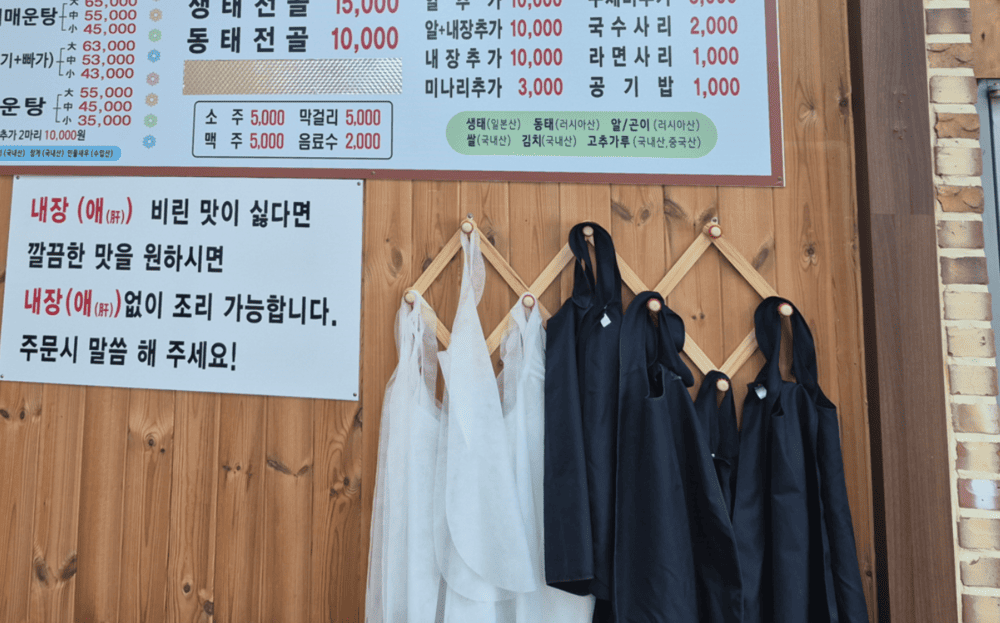
When eating dishes with red broth like Budae Jjigae or greasy grilled meat, it’s a good idea to wear an ‘Apron’ to protect your clothes. If you see aprons hanging on the walls around the restaurant, feel free to grab one and put it on. If you don’t see one, just ask the staff. Korean restaurants provide them for free!
4. Free Banchan (Side Dish) Refills: ‘Self-Bar’ or ‘Ask the Staff’
When you order a main dish at a Korean restaurant, various side dishes (Banchan) like kimchi and seasoned veggies are provided by default, and most of these are available for unlimited free refills! This usually operates in one of two ways.
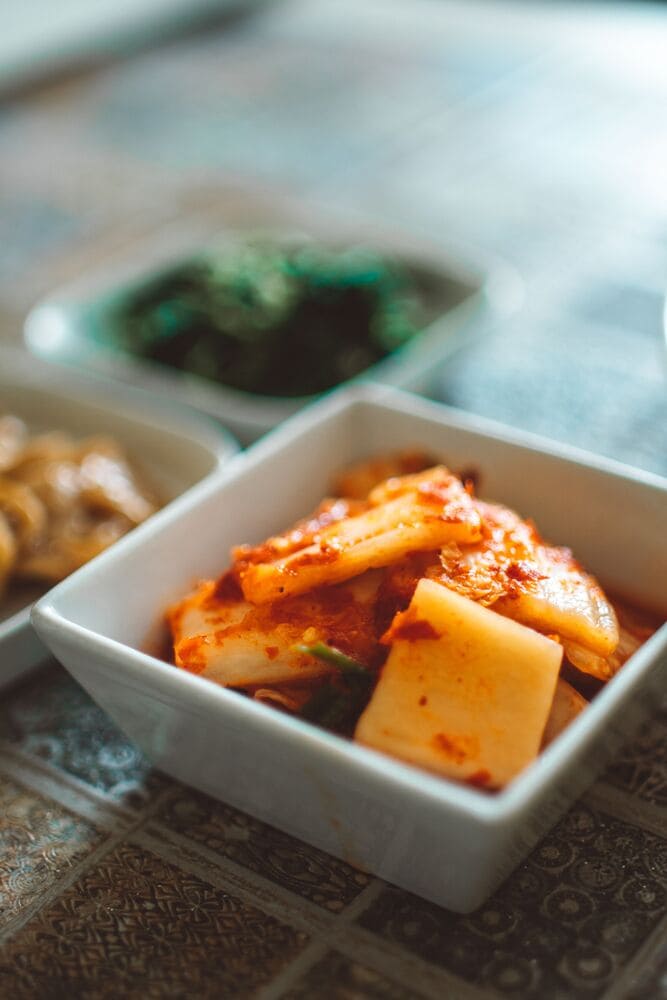
- 🥗 Method 1. Self-Bar: This is a place where side dishes are gathered in a ‘Self-Bar’ on one side of the store. Without needing to worry about what others think, you can just go and serve yourself as much as you want.
- 🙋♀️ Method 2. Ask the Staff: If you don’t see a self-bar, just pick up your empty plate, press the ‘call bell’, and ask the staff for “More, please.” The staff will kindly bring you a refill.
🚨 Warning: Just because it’s a free refill doesn’t mean you should take too much and leave leftovers! Restaurants with self-bars often have a rule stating “An environmental charge applies for leftover food,” so please only take a reasonable amount that you can finish.
5. Payment Methods (Pre-paid vs. Post-paid) & Tip Culture
Payment at Korean restaurants is divided into two types depending on when you order. Don’t wait at your seat asking the staff for a receipt like in Western countries!
- 📱 Pre-paid: As explained earlier, if the restaurant has a payment tablet PC installed on the table, you’ve already completed the payment by inserting your card during the first order, so you can just leave after eating.
- 💳 Post-paid at the Counter: If you didn’t pay via a tablet, you must go directly to the counter (cash register) near the exit to pay after finishing your meal. If there is a paper bill (receipt) on your table, take it to the counter. If there is no bill, simply point to the table you ate at or tell the cashier, and they will check and process your payment.
🚫 “Do I need to leave a tip?”
The answer is “There is no tipping culture in Korea, so you don’t need to leave one at all!” The price on the menu is the final amount.
6. The Outdoor Restroom Mission: Inside vs. Outside (Password)
When using the restroom at a restaurant, the way you enter depends on its location. Don’t panic and remember these tips!
- 🚻 Indoor Restroom: If the restroom is located inside the restaurant, you can simply open the door and use it comfortably without any special locks.
- 🔐 Outdoor Restroom (Password Check Required): Shared restrooms located in the hallway outside the restaurant are often firmly locked to prevent unauthorized use by outsiders! If you look at the wall near the restaurant entrance or on the door itself, a numerical password is usually written down. Make sure to check the password, go outside, punch in the numbers, and use the facility.
👉 Next UP: Have you perfectly mastered how to use general restaurants? In the next episode, we will cover in detail the [🔗 Part 20. The Ultimate Guide to Korean Restaurants: AYCE (All-You-Can-Eat) Tips & Etiquette], where you can stuff yourself with meat at an incredible value!