In our previous guide [🔗 Part 20. The Ultimate Guide to Korean Restaurants: AYCE (All-You-Can-Eat) Tips & Etiquette], we covered how to navigate unlimited dining in Korea.
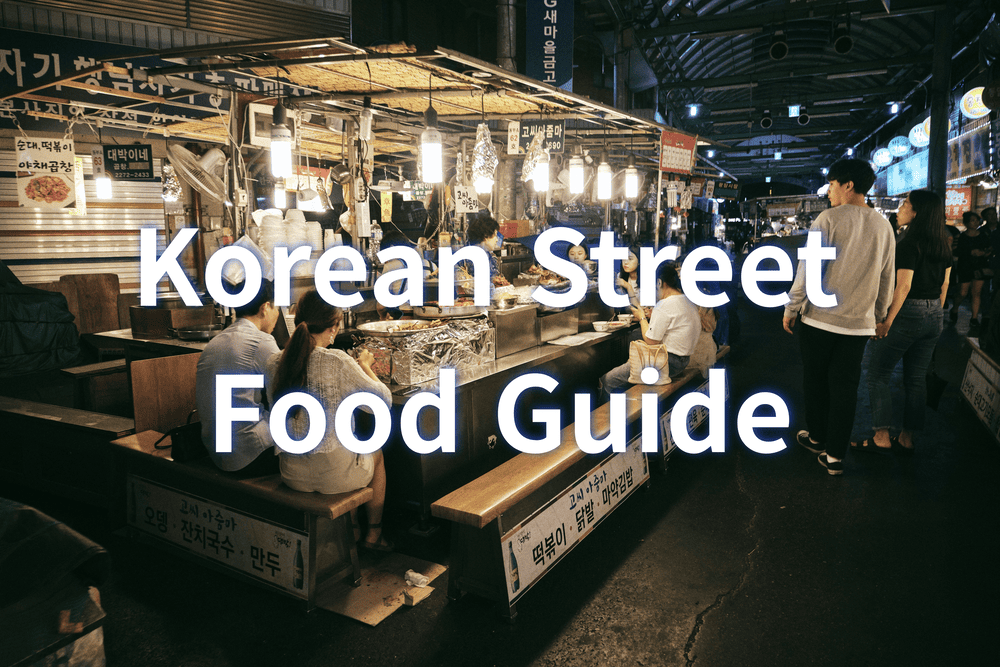
Filling up at a restaurant is great, but the true joy of traveling in Korea lies in following the delicious aromas wafting through the streets. From Myeongdong street to traditional markets and Hangang River night markets, Korean street food offers the ultimate gastronomic adventure, allowing you to enjoy a variety of flavors at affordable prices.
However, street food stalls (Pojangmacha) have slightly different payment methods and dining etiquette compared to standard restaurants. Here is the essential guide to enjoying Korean street food like a local without panicking!
1. Payment Methods: Cards Are Common, But Prepare Cash for Street Food!
Korea is practically a perfect ‘Cashless Society’ where credit cards are accepted everywhere. However, street food stalls (Pojangmacha) can be an exception.
- 💵 Prepare Cash: Most places with a physical storefront accept card payments, but small street food carts sometimes do not have credit card terminals. Therefore, it is highly recommended to prepare some cash in advance—about 30,000 to 40,000 KRW for two people for light snacks, or up to 100,000 KRW if you plan to eat various foods as a full meal.
- 📱 Bank Transfer (Account Transfer): You will often see a bank account number written on the front of the stall. If you are a traveler with a Korean bank account or a money transfer app, you can easily pay via smartphone account transfer instead of cash.
2. Must-Try Street Foods for a Quick Bite
When you visit a street or night market, countless foods will tempt you. If you are not sure what to eat, try starting with these popular menu items!
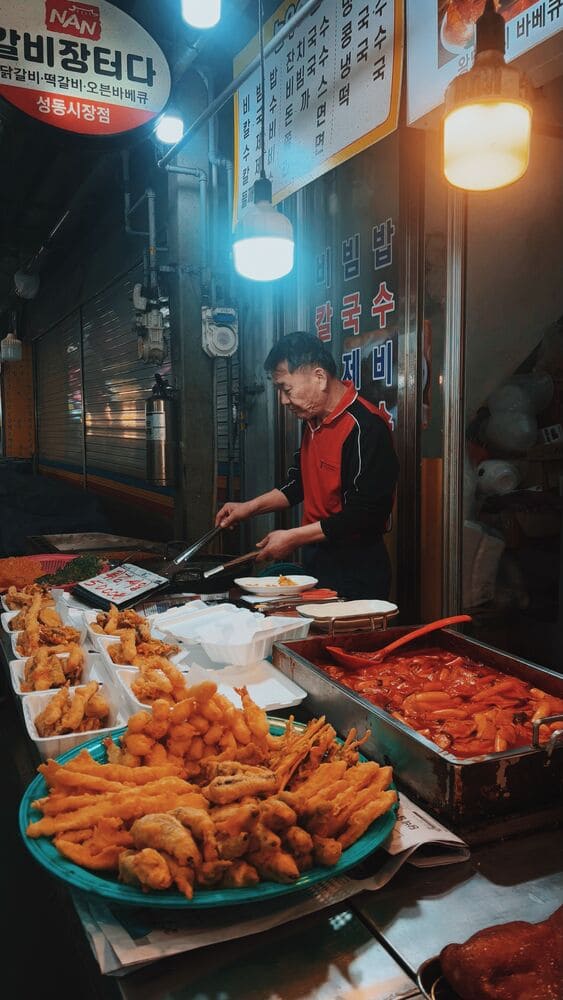
- 🌶️ Tteokbokki & Twigim: Tteokbokki (spicy rice cakes in a sweet gochujang sauce) is Korea’s representative soul food. It is a local rule to order crispy Twigim (fried snacks like squid or seaweed rolls) and dip them deeply into the Tteokbokki sauce.
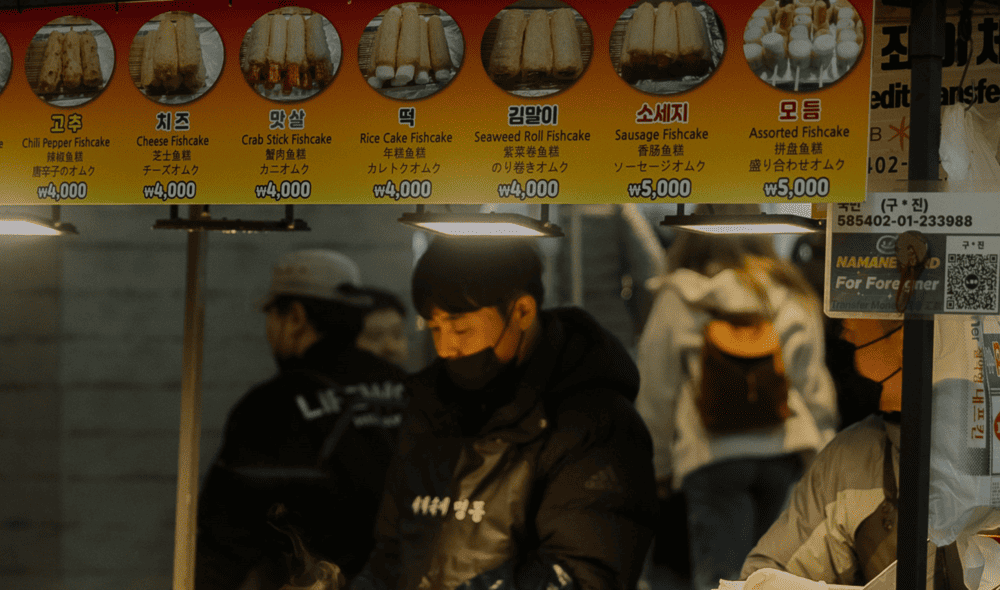
- 🍢 Odeng (Fish Cake Skewers): These are fish cakes boiled in hot broth. Serving yourself the warm Odeng broth in a paper cup is completely free, and you can drink as much as you want!
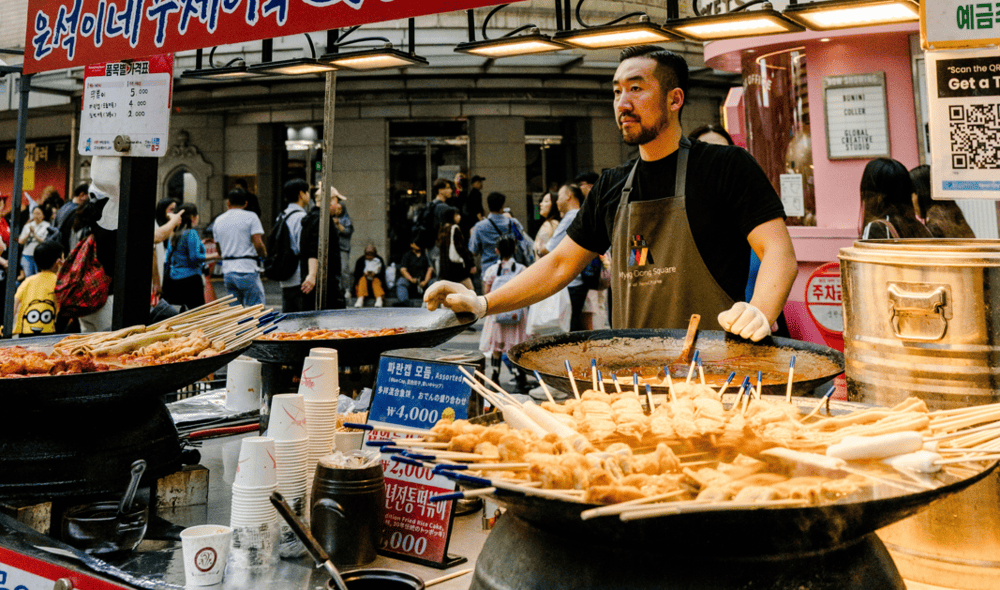
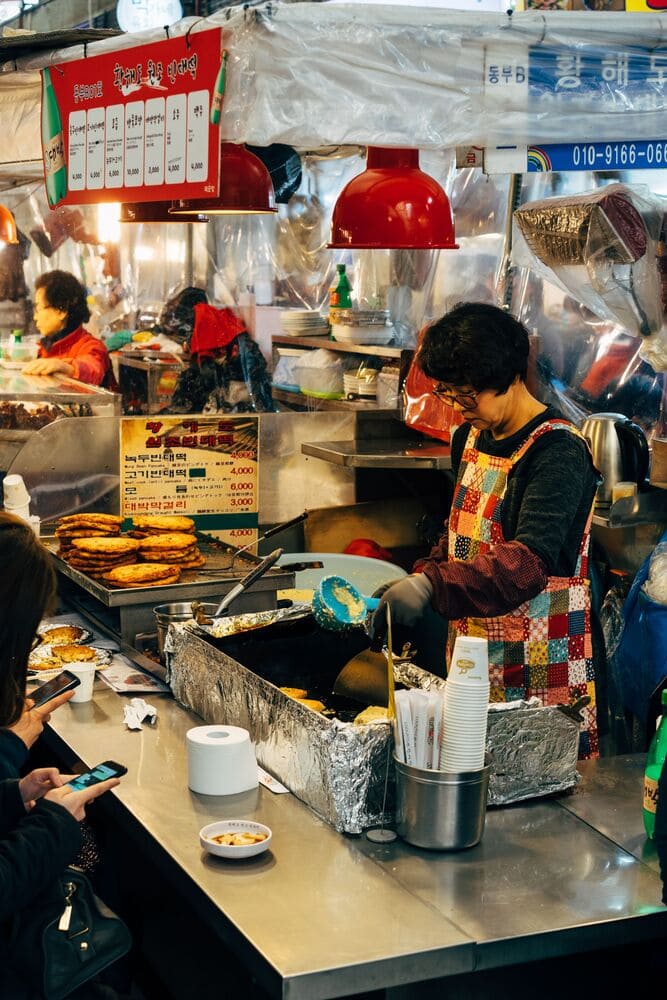
- 🍙 Mini Gimbap & Jeon: If you visit a traditional market, make sure to try bite-sized mini Gimbap (Mayak Gimbap) and ‘Jeon’ (Korean pancakes like mung bean pancakes) crisply fried in oil.
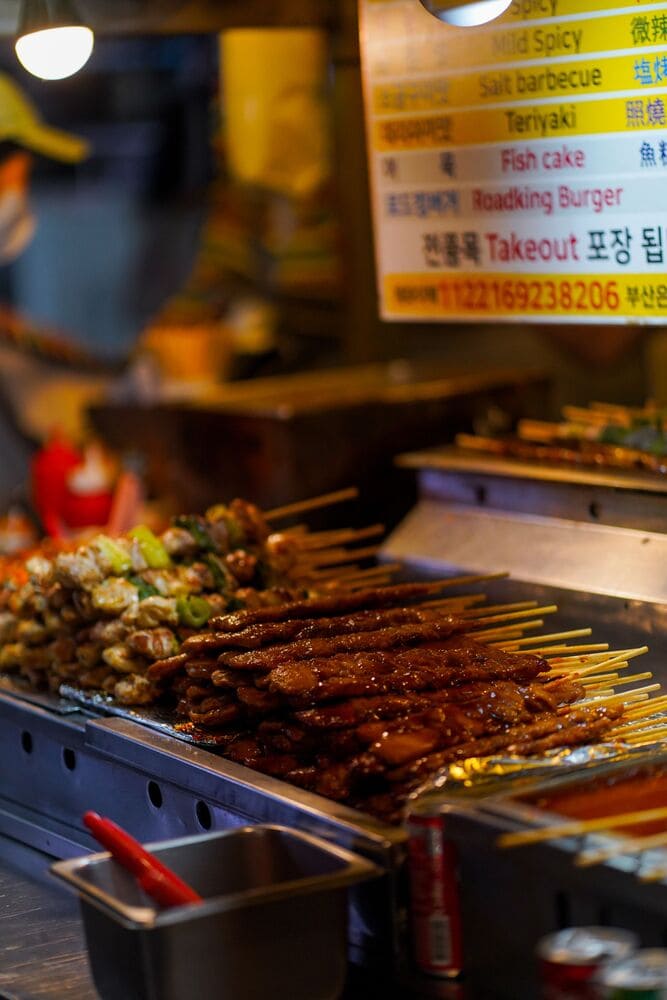
- 🍡 Dakkochi (Chicken Skewers): Grilled over charcoal with chicken and green onions, then coated in sweet BBQ or spicy sauce. It is an excellent snack for walking tours.
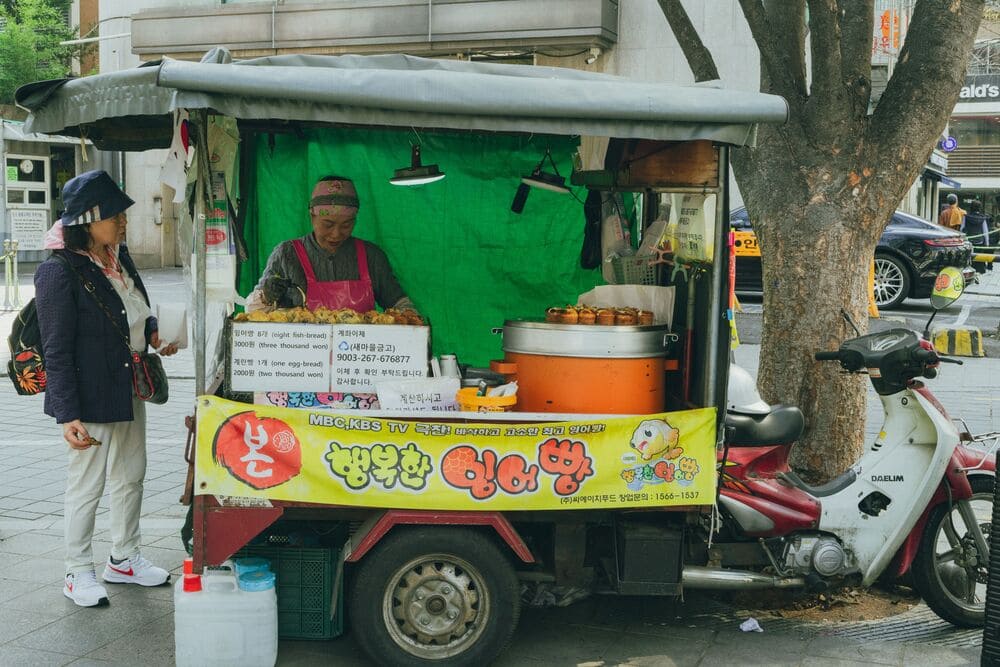
- 🥞 Sweet Desserts (Hotteok, Bungeoppang & 10 Won Bread): Finish your meal sweetly with ‘Hotteok’ (a chewy pancake filled with honey and nuts), ‘Bungeoppang’ (a winter-exclusive fish-shaped pastry filled with sweet red beans), or the trendy ’10 Won Bread’ (a coin-shaped bread overflowing with mozzarella cheese).
💡 [Street Food Tip: How to Use Shared Sauces]
Just like the Odeng soy sauce, sauce containers at street stalls are shared with everyone. Therefore, rather than dipping your bitten food directly into the sauce container, it is good manners to use the provided ‘Brush’ to apply the sauce, or use a Spray-type sauce!
3. Best Street Food Hotspots in Korea (Where to Go?)
In the past, you could easily find food carts in front of almost every subway station in Korea. However, due to strict food safety registration laws and city street organization projects, most unauthorized street vendors have disappeared from regular residential streets.
Instead, Korean street food culture has been safely organized and concentrated in designated ‘hotspots.’ Note that most street vendors start opening around 4 to 5 PM, so it’s best not to visit too early. If you are looking for authentic street food, we highly recommend these 4 places!
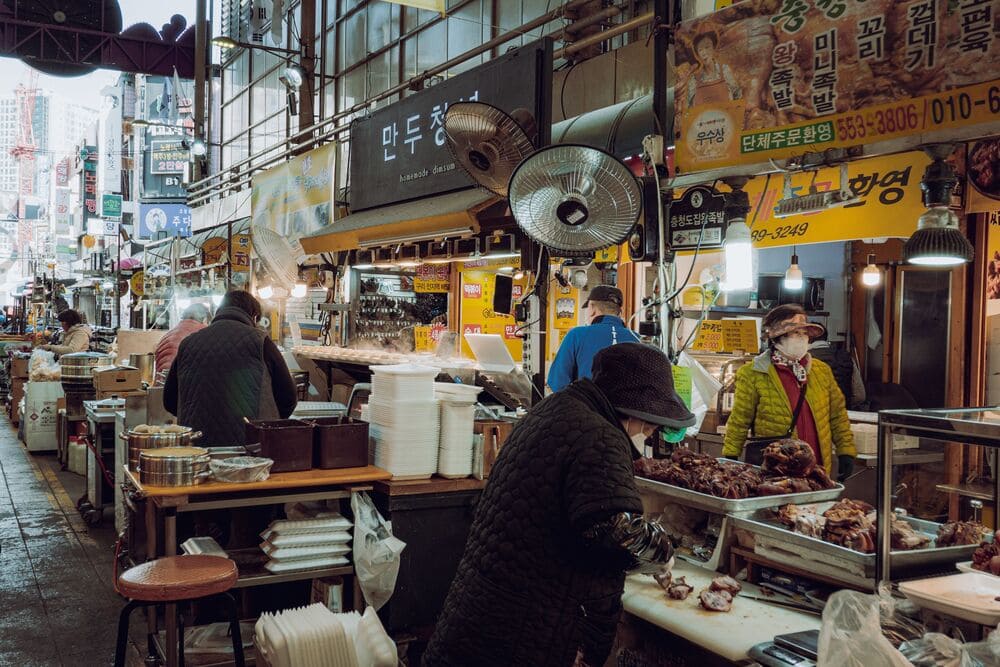
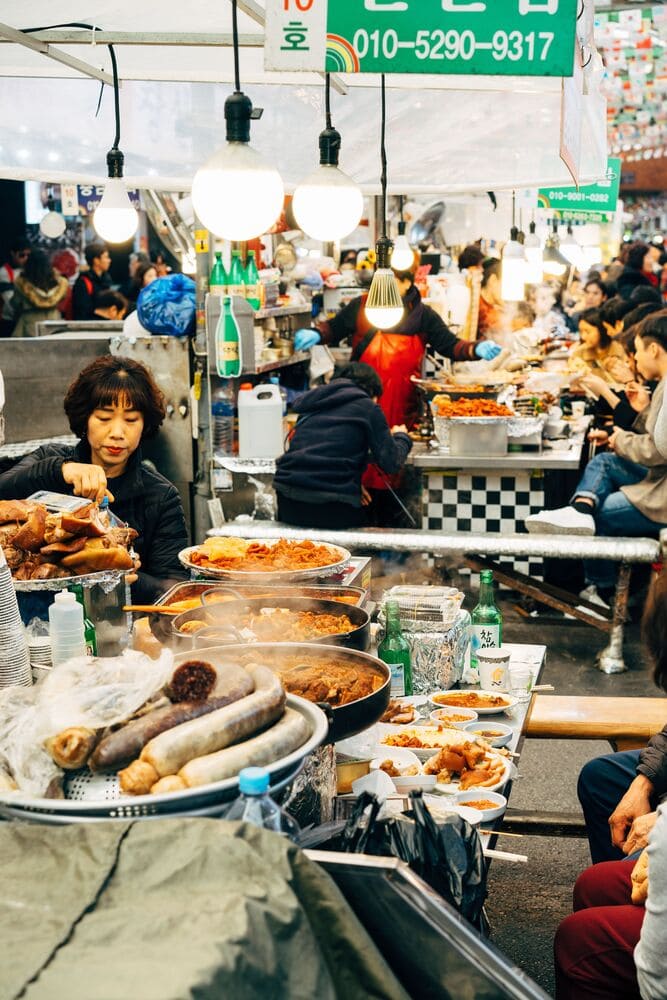
- 🎪 Traditional & 5-Day Markets: This is where locals go to feel the authentic street food vibe. Whether you visit Seoul’s ‘Gwangjang Market’ or regional traditional markets and ‘5-Day Markets’ (held every five days), you can sit with Makgeolli (rice wine) and enjoy diverse foods like Bindaetteok, Mayak Gimbap, and Yukhoe.
- 🌉 Hangang Night Market: Every spring (May–June) and autumn (September–October), a moonlight night market gathers dozens of food trucks around Hangang Park on weekend evenings. You can enjoy global foods and Korean snacks while viewing the river’s nightscape.
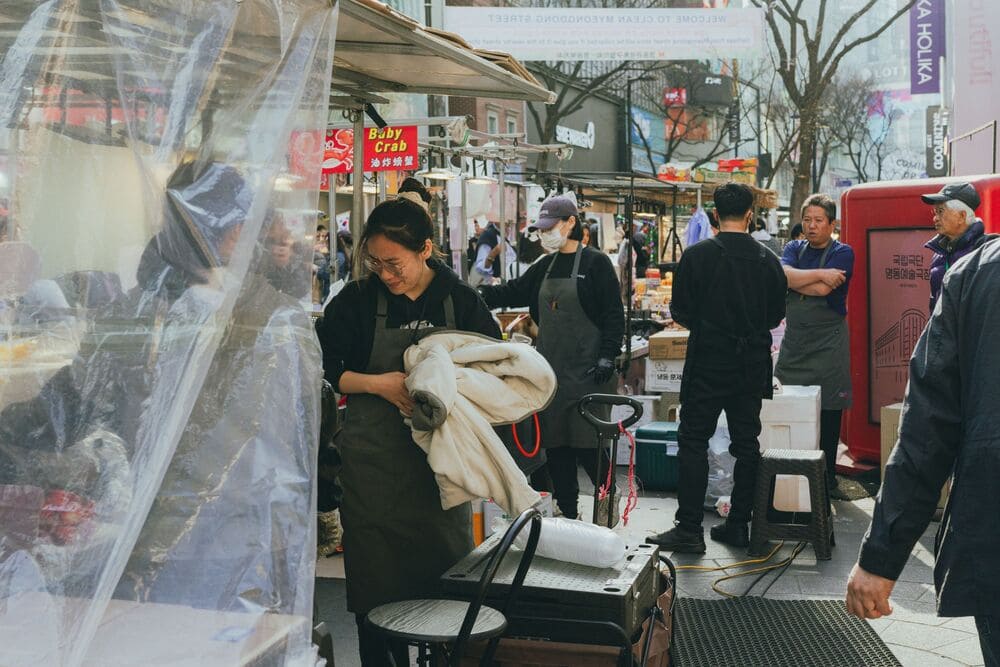
- 🛍️ Myeongdong: The central street of Myeongdong transforms into a massive, legally designated street food alley in the afternoon. It features unique menus tailored to tourists, such as grilled lobster and cheese scallops.
- 🍻 Jongno & Euljiro ‘Yajang’ (Outdoor Seating): This is currently the trendiest street dining culture in Korea. At night, restaurants set up plastic tables and chairs right on the streets and alleys. Visit Jongno 3-ga or Euljiro Nogari Alley to enjoy the cool breeze with street beer and snacks!
4. Street Food Etiquette
- 🧍♂️ Eat within Designated Areas: Taking out food to your accommodation is perfectly fine! However, walking around crowded streets while eating can cause hygiene and other issues. Therefore, we highly recommend staying in designated eating areas or right in front of the stall until you finish your food before moving on.
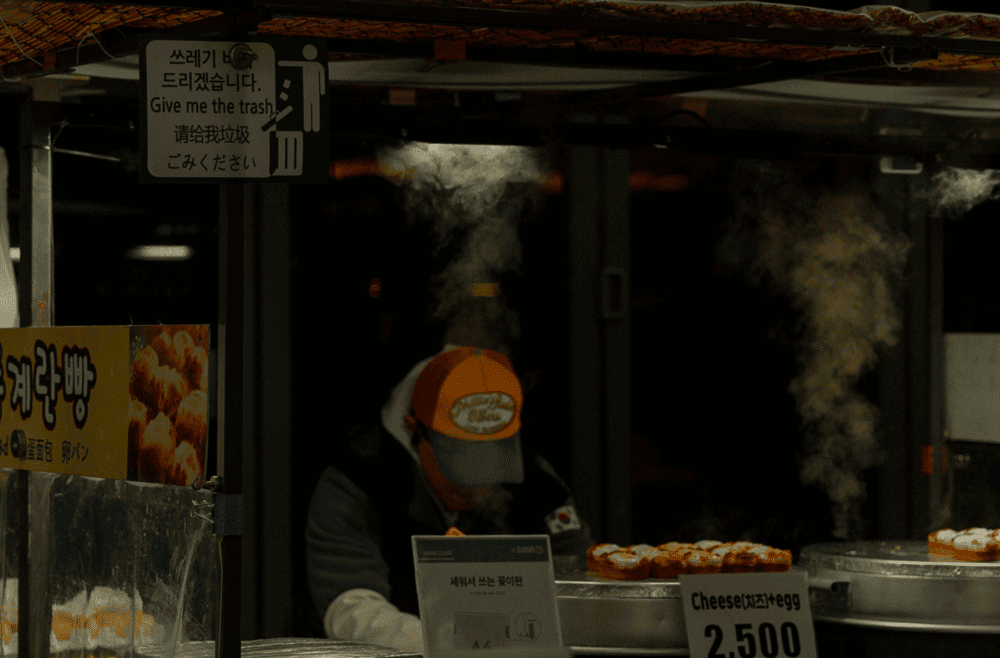
- 🗑️ Return Skewers and Trash to the Vendor: Public trash cans are rare on Korean streets. Instead of throwing empty paper cups or sharp wooden skewers on the ground, simply return them to the vendor you bought the food from.
👉 Next UP: Did you experience the most local flavors through Korea’s street food and night markets? If you’ve delighted your taste buds with delicious Tteokbokki and Hotteok, it’s time to experience the ‘coffee transfusion’ that runs through Koreans’ blood.
In the next episode, [🔗 Part 22. Korean Cafe Culture: Types, Ordering System, and Essential Etiquette], we will dig into the most dynamic cafe culture in the world!