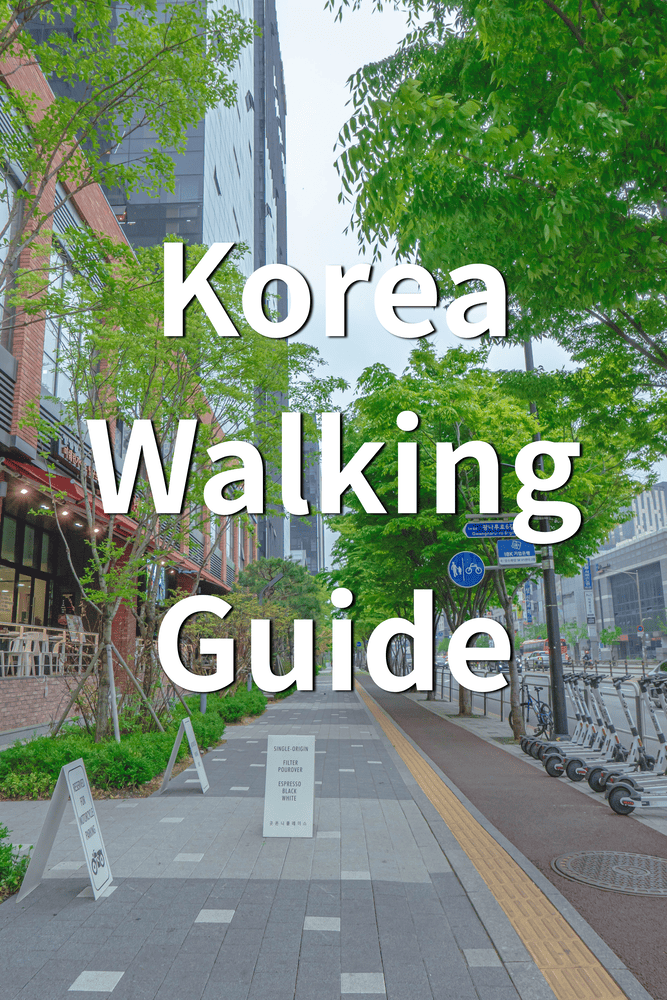
Did you safely navigate the complex subway maze through [🔗 Part 10. The Ultimate Seoul Subway Survival Guide: Transfers, Exits & Local Tips]? Now it’s finally time to come above ground and properly walk the streets of Korea.
Korean streets are generally very safe and highly walkable. However, once you start exploring, there are unique cultural nuances hidden throughout that might make foreign tourists tilt their heads. In this post, from delivery scooters riding on sidewalks to the reason why there are no public trash cans, we introduce a Korean walking guide that might be baffling if you don’t know it, but is fascinating once you understand it.
1. Things to Note When Walking
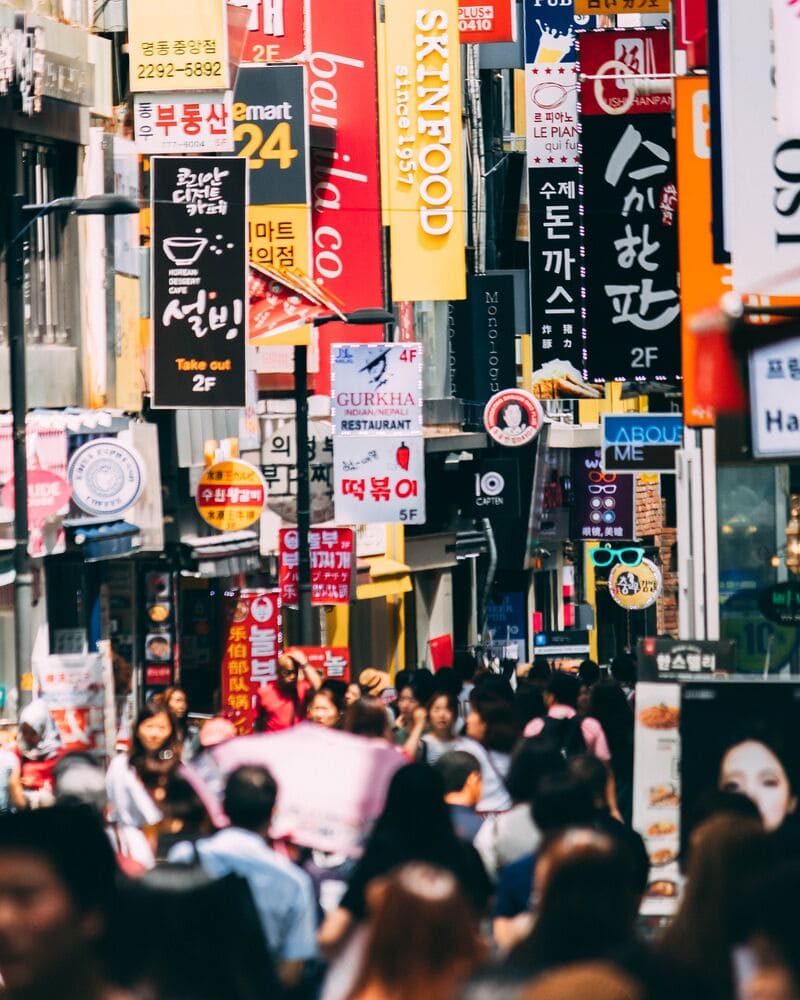
Here are three basic things to keep in mind so you don’t get caught off guard when walking the streets of Korea.
- 🚶♂ Keep Right: The basic etiquette when walking in Korea is to ‘keep right‘. You can naturally stick to the right side on wide sidewalks or subway transfer passageways.
- 🛵 Delivery Scooters: Due to Korea’s fast-paced delivery culture, you might occasionally encounter unexpected situations where scooters ride up onto the sidewalk (though certainly not all of them do). This is absolutely not the pedestrian’s fault, but getting hurt during a fun trip will only ruin your mood, so it’s best to pay a little attention to your surroundings.
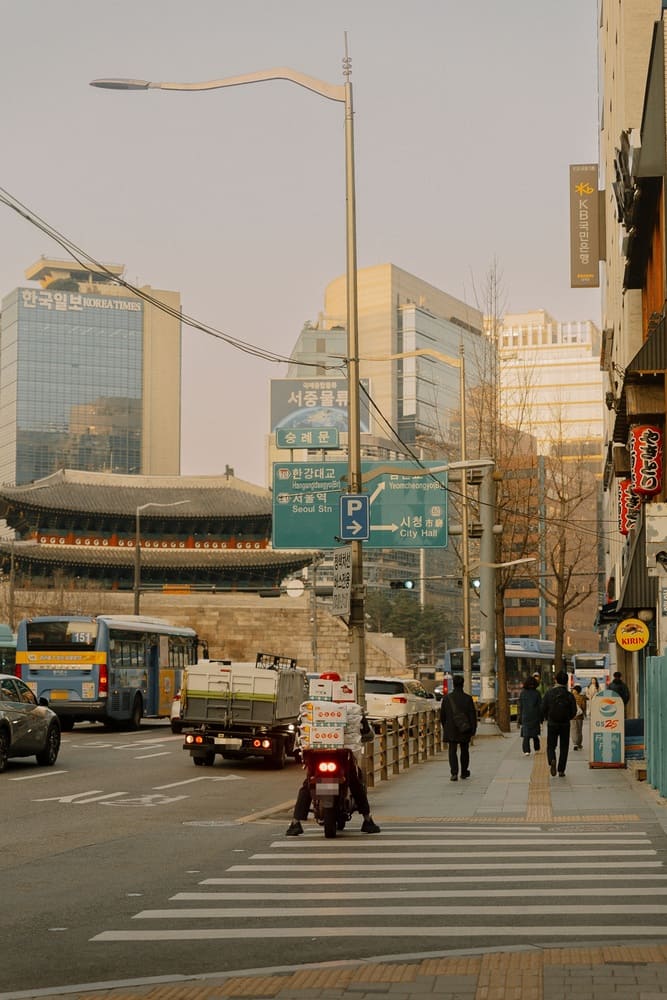
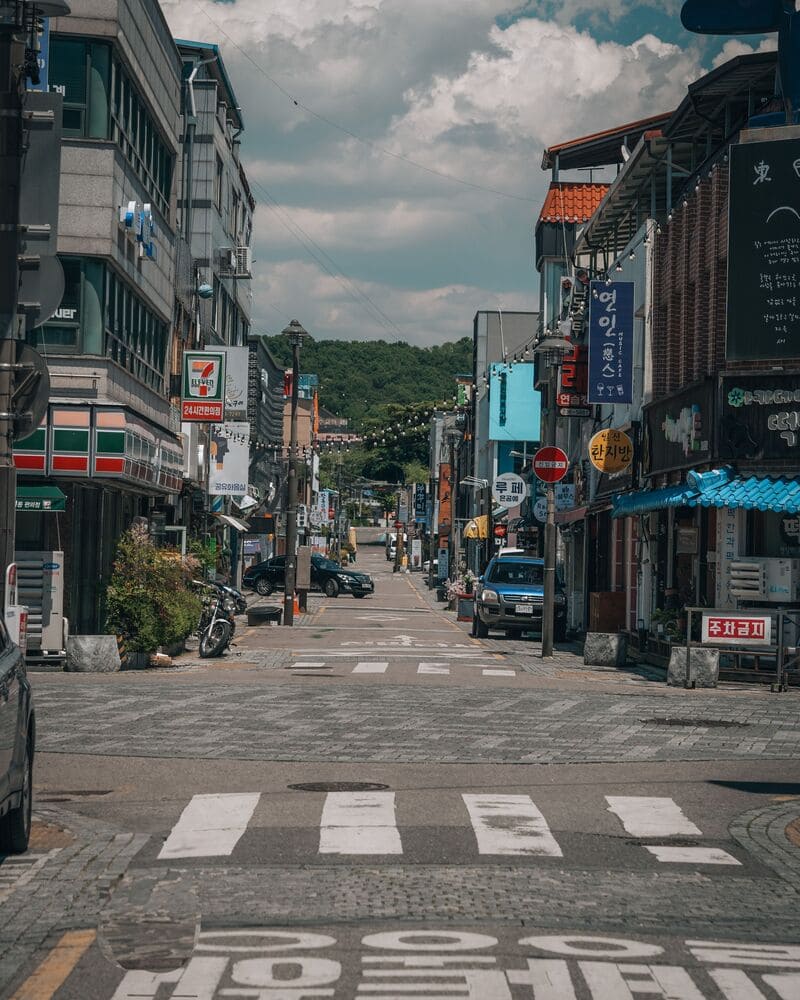
🚗 Shared Alleys: Famous hot spot alleys like Hongdae, Seongsu-dong, and Myeongdong often have narrow roads without a clear distinction between sidewalks and roads for cars. Since pedestrians and vehicles share the road, don’t be startled if a car passes by; just naturally step aside to the edge of the street.
2. Hidden Hills & Stairs
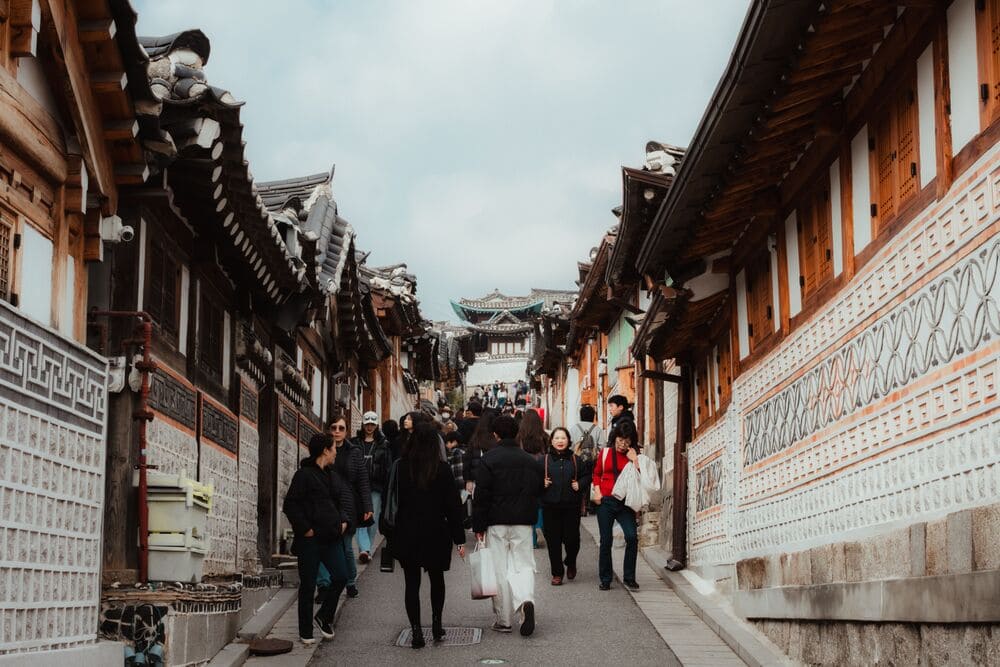
- 🗺 The Trap of Naver Map (2D): When traveling in Korea, you will often unexpectedly encounter mountains and hills. Famous tourist spots like Itaewon, Haebangchon, and Bukchon Hanok Village have steep hills and endless stairs hidden within them, but map apps do not show this elevation.
- 👟 Comfortable Sneakers Recommended: If your daily itinerary includes a lot of walking, we highly recommend wearing comfortable shoes.
3. Crossing Wide Roads & Crosswalks
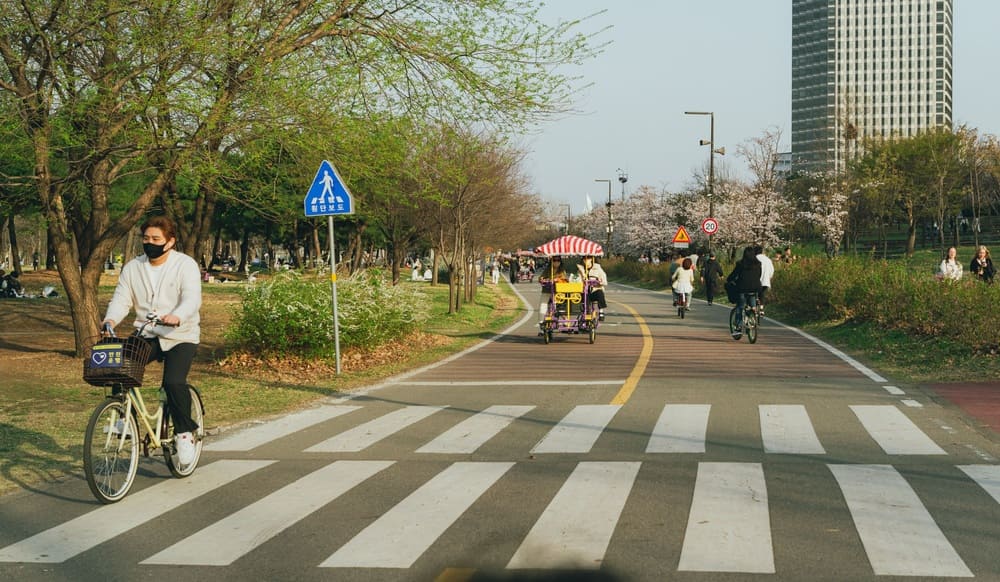
Koreans use public transportation a lot, but the personal car usage rate is also very high. Because of this, wide roads with multiple lanes are common in the city, and you will frequently need to cross crosswalks while walking. It doesn’t matter if you use an overpass or an underpass, but here are some interesting tips related to the crosswalks that travelers on foot will encounter most often.
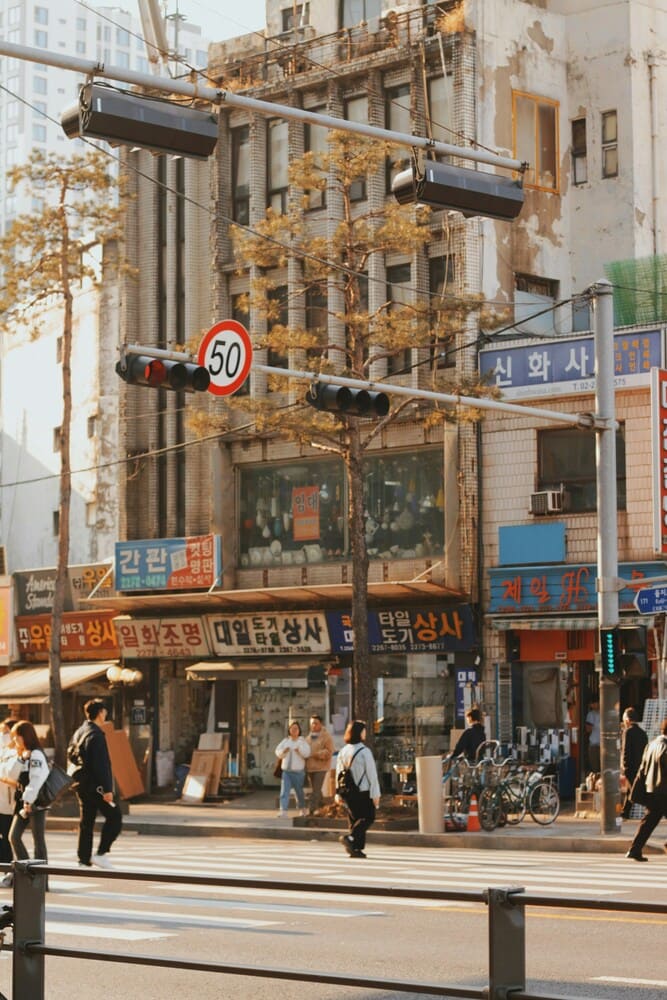
- 🚥 Floor Traffic Lights: If you look down at the ground in front of a crosswalk, you can see LED traffic lights (red/green) installed on the pavement. It’s an excellent safety infrastructure designed for people who walk while looking at their smartphones.
- ⏱ Countdown Timer: Korean pedestrian traffic lights display the remaining time in numbers below the green light. It is very convenient as you can intuitively check how much time is left before crossing the street.
- 🟡 No Need to Press the Yellow Button!: Unlike the ‘pedestrian push button’ in Western countries that change the signal, the yellow button on the traffic light pole is a ‘voice guidance button for the visually impaired’. Crosswalks in Korea operate on a timer system where the light automatically turns green, so you don’t need to press the button.
💡 Exception: There are ‘pedestrian-actuated traffic signals’ in Korea where you must press a button for the signal to change. However, there are so few of them that unless you go to a quiet, deserted rural village, you will rarely see one during your trip.
- 👀 Unsignalized Crosswalks: At small crosswalks without traffic lights, check for oncoming cars before crossing. Although drivers are required to stop for pedestrians waiting to cross, they may not always do so, especially on busy roads. For your safety, make sure any approaching vehicle has come to a complete stop before crossing.
4. Sunscreen & Shade Canopies
- 🧴 Sunscreen is a Must: The midsummer (June-September) sun in Korea is quite intense and piercing. Don’t forget to apply plenty of sunscreen when going out.
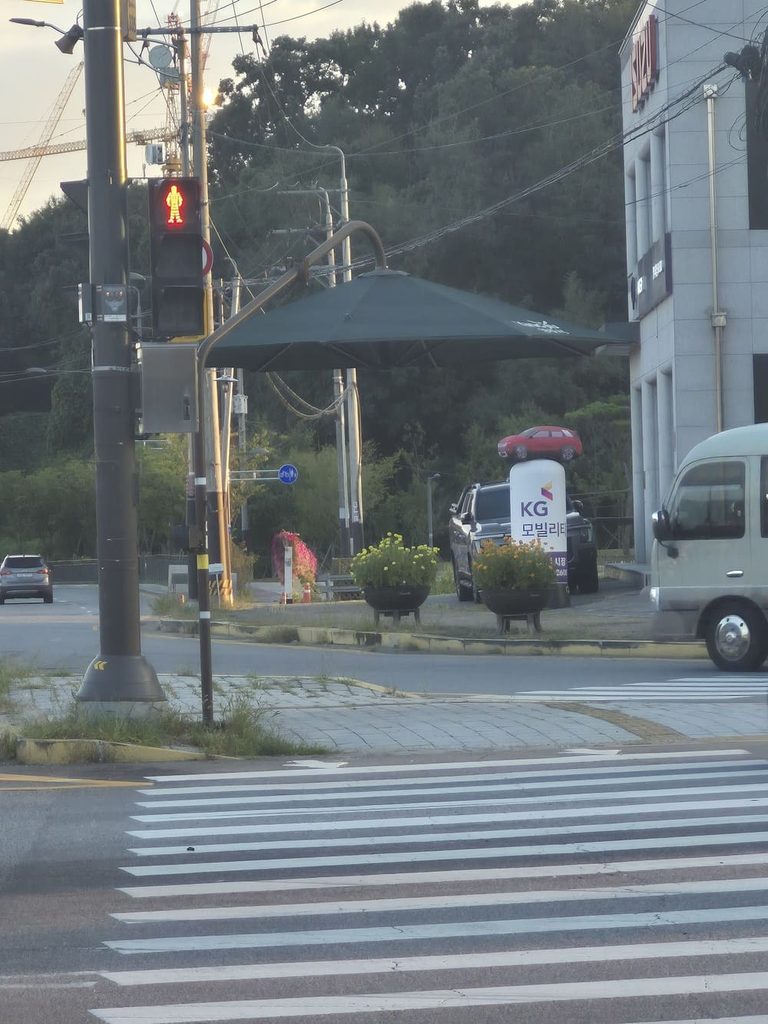
- ⛱ Smart Shade Canopies: The giant parasols you can see when waiting for the signal at a crosswalk in summer are public shade canopies that anyone can stand under. They are very useful for escaping the blazing sun or seeking quick shelter from a sudden rain shower.
5. Sudden Showers
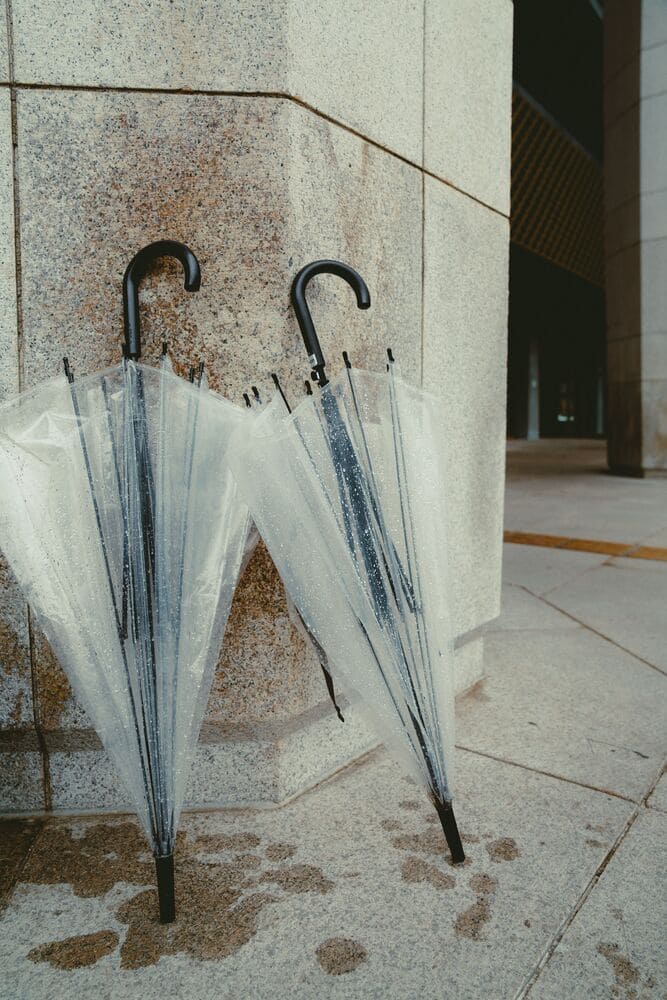
- ☔ Convenience Stores & Daiso: If you travel to Korea during the summer monsoon season, you will frequently encounter sudden showers. If you get caught in the rain while walking, don’t panic and look for a nearby convenience store or Daiso. They will definitely be selling umbrellas.
- ☂ Umbrella Prices: Convenience stores (CU, GS25, 7-Eleven) are on every corner, making them great for immediately escaping the rain, and they sell sturdy umbrellas, but the prices are somewhat high. On the other hand, at Daiso, you can purchase a cheap vinyl umbrella for about 5,000 KRW. Use the most convenient option depending on your situation.
6. Public Free Wi-Fi
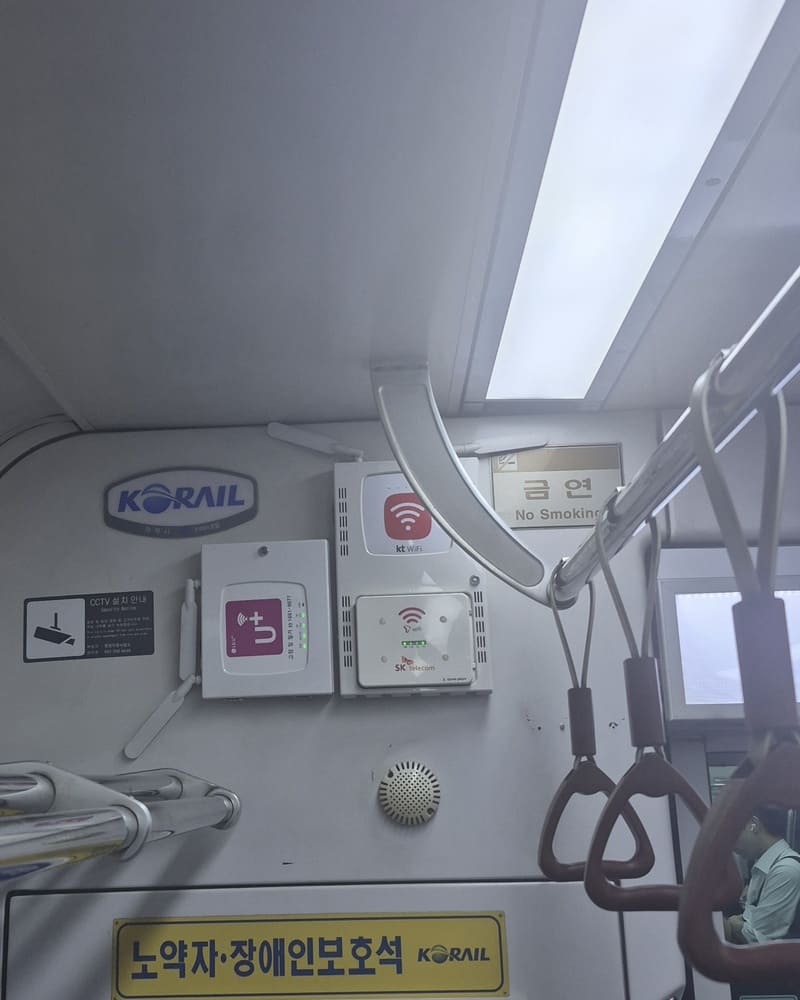
- 📡 Public Wi-Fi: Free public Wi-Fi is provided not only at bus stops and subway stations but also inside moving buses and subway cars. It is very useful if you run out of data during your trip.
- 📱 How to Connect: Select ‘Public WiFi Free’ or ‘Seoul_WiFi’ from your smartphone’s Wi-Fi list. You do not need to enter a password; just press the ‘Connect’ (무료 이용하기) button in the center of the internet window that pops up, and you can immediately enjoy a fast connection. (Note that the Wi-Fi name or connection screen may differ slightly depending on the region or municipality.)
- ☕ Extra Tip: Cafe & Restaurant Wi-Fi: Most cafes and restaurants in Korea also provide free Wi-Fi for customers. If you are visiting a store, the Wi-Fi name and password are usually displayed on the walls or printed on your receipt, so make good use of them.
7. Finding Restrooms
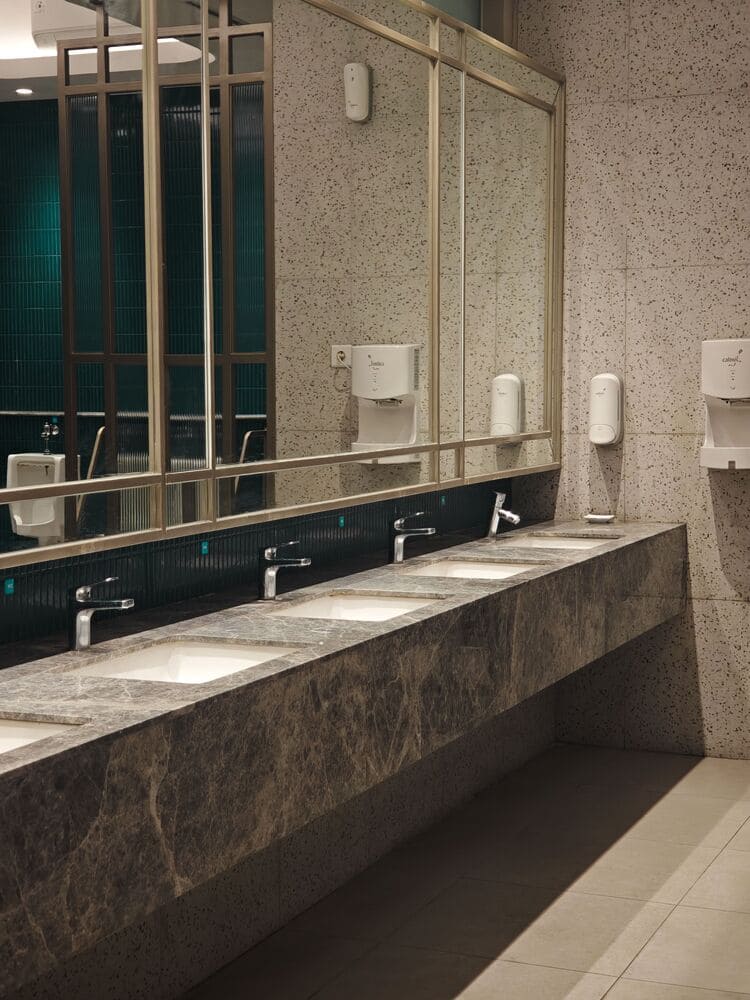
If you suddenly have an urgent need while walking, remember the following 4 places. Most restrooms in large buildings in Korea are clean and open ‘for free’.
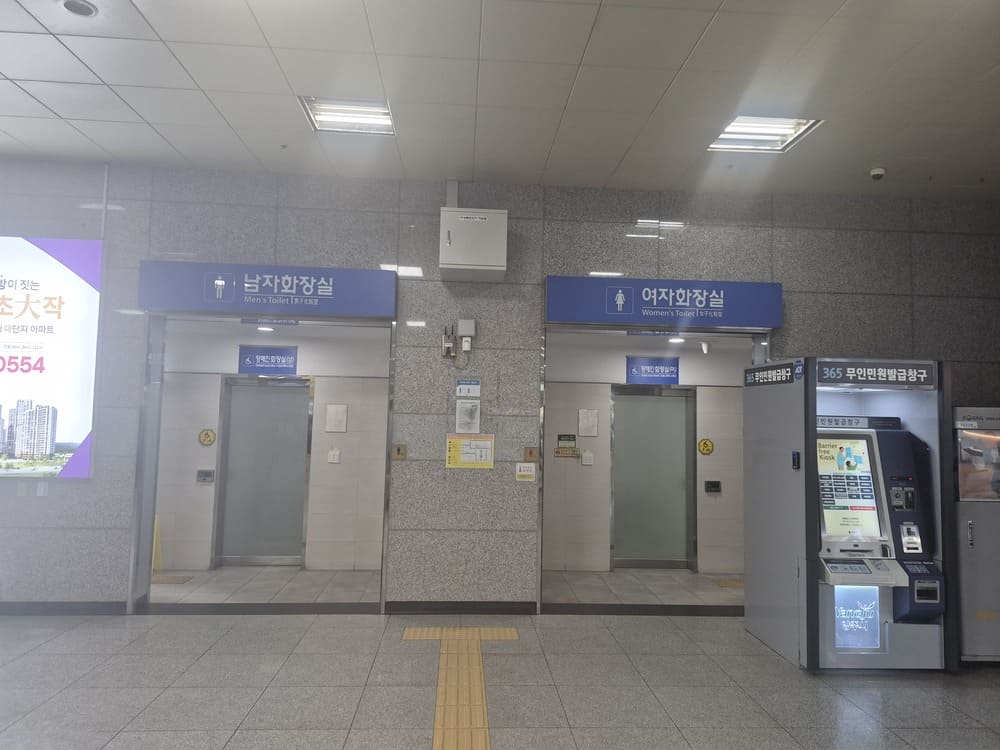
- 🚇 Subway Stations: Most subway stations provide restrooms. However, please note that they are sometimes located inside the ticket gates.
- 🛍 Large Department Stores & Malls: If there is a large department store or shopping complex nearby, try using it. The restrooms here are exceptionally clean and pleasant.
- 🏢 General Commercial Buildings: Generally, commercial buildings also have restrooms. Note that they are often locked with a password for store customers, but occasionally they are left open, so keep this in mind.
- ☕ Cafes & Restaurants: Most cafes and restaurants have restrooms inside. Cafe restrooms, in particular, are often very clean, so it’s a good idea to use them if you are planning to visit the store anyway.
8. Where are the Trash Cans?
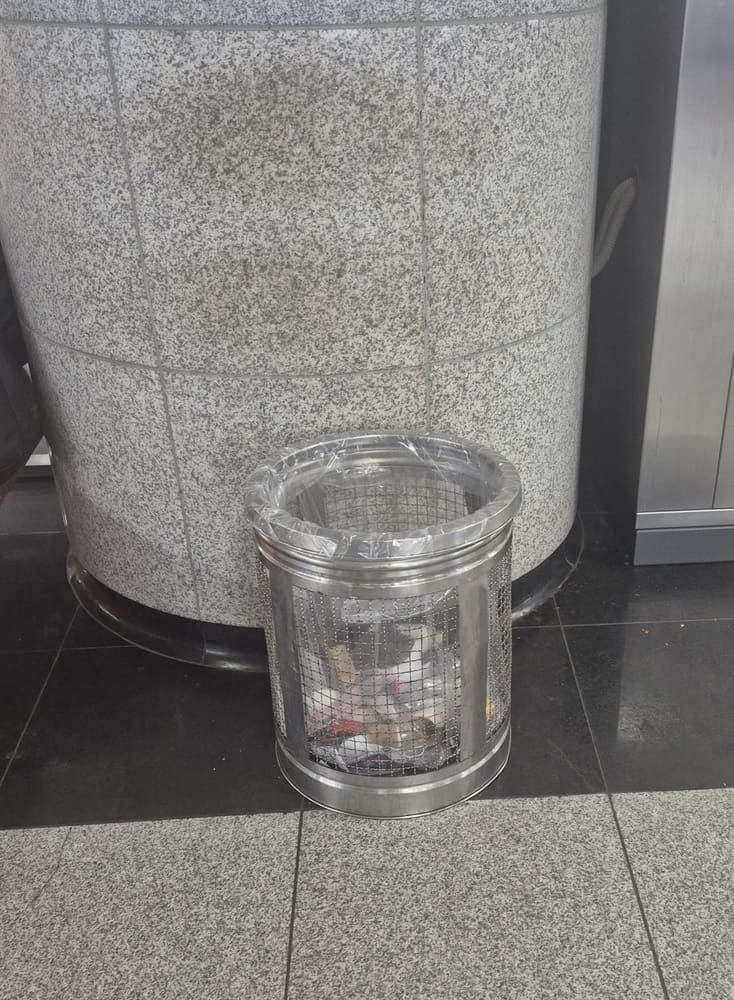
🗑 What to Do With Your Trash: Public trash cans can be hard to find on Korean streets. If you bought food or drinks from a shop or street vendor, you can ask if you can dispose of the empty containers there. If you have a small amount of trash, look for a nearby public trash can. Many subway stations have public trash cans near the restrooms. Otherwise, take your trash with you until you find one.
👉 Next UP: Have you mastered how to walk the streets? Next up is the essential transportation for traveling fast across Korea beyond Seoul, [🔗 Part 12. Preparing for Korea Train Travel: Choosing Your Train and Tips for Booking the Best Seats].