Did you successfully board the train following [🔗 Part 9: The Ultimate Seoul Subway Survival Guide – Route Map & Insider Tips]? Now it’s time to blend in with the locals, navigate the complex maze, and head to your destination.
In this part, we will cover essential subway etiquette, the secret to ‘fast transfers and exits,’ and practical techniques for finding the right exit in massive stations.
1. Act Like a Local! Essential Subway Etiquette
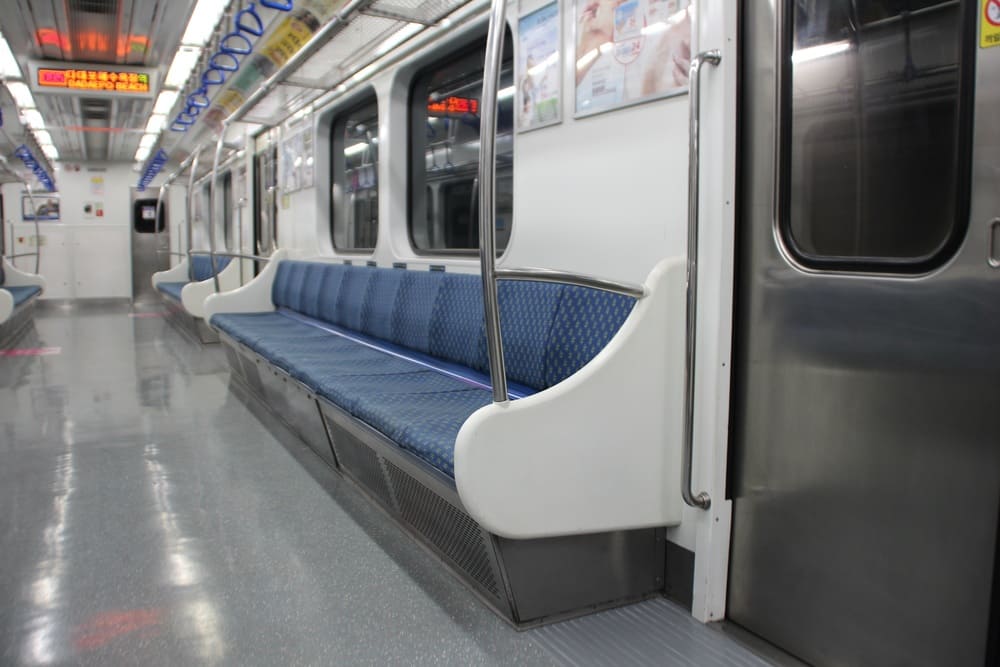
Korean subways are generally kept very clean and quiet. To blend in naturally like a local, please remember the following essential subway etiquette.
🚉 Moving Around Inside the Station
- 🚶♂ Keep Right and No Running: Subway station traffic is basically ‘keep right.’ Running in crowded spaces is very dangerous, so please walk safely.
- 🧍♀ Escalator Etiquette: When riding an escalator, you should stand still and hold on to the handrail for safety. However, in Korea, people often keep to the left to walk and the right to stand.
- 🛗 Elevators for Luggage and Strollers: If you have a heavy suitcase or stroller, please use the elevator for safety. Although these are primarily for the elderly and disabled, it is perfectly fine to use them if you have a lot of luggage.
- 🚇 Let Passengers Off First: Stand in line following the arrows marked on the floor in front of the screen doors. It is the most basic and important etiquette in the Korean subway to wait until all arriving passengers have fully exited the train before you board.
🚇 Inside the Train
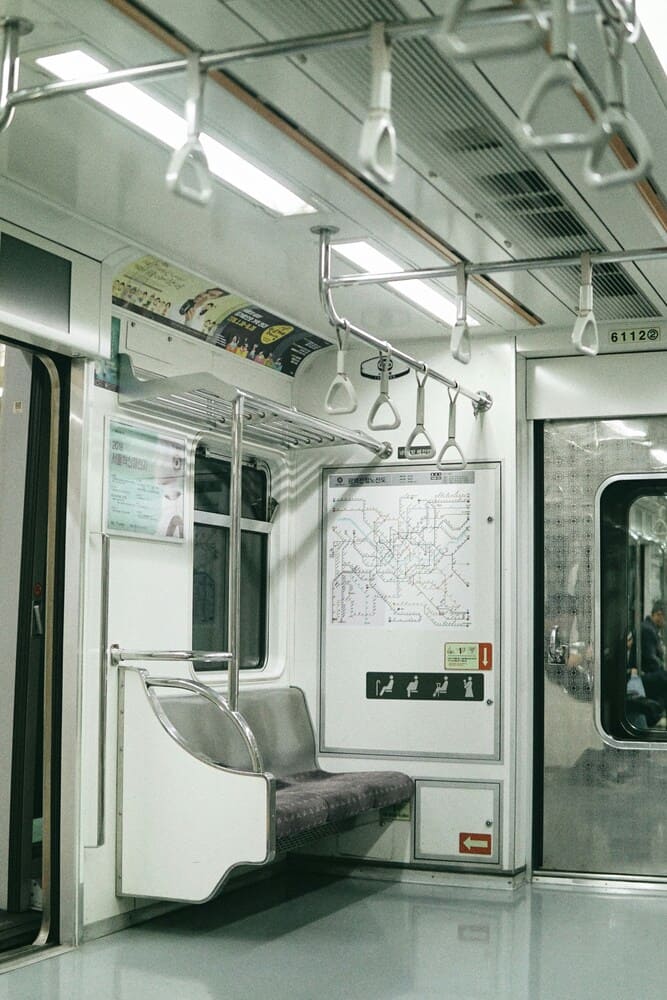
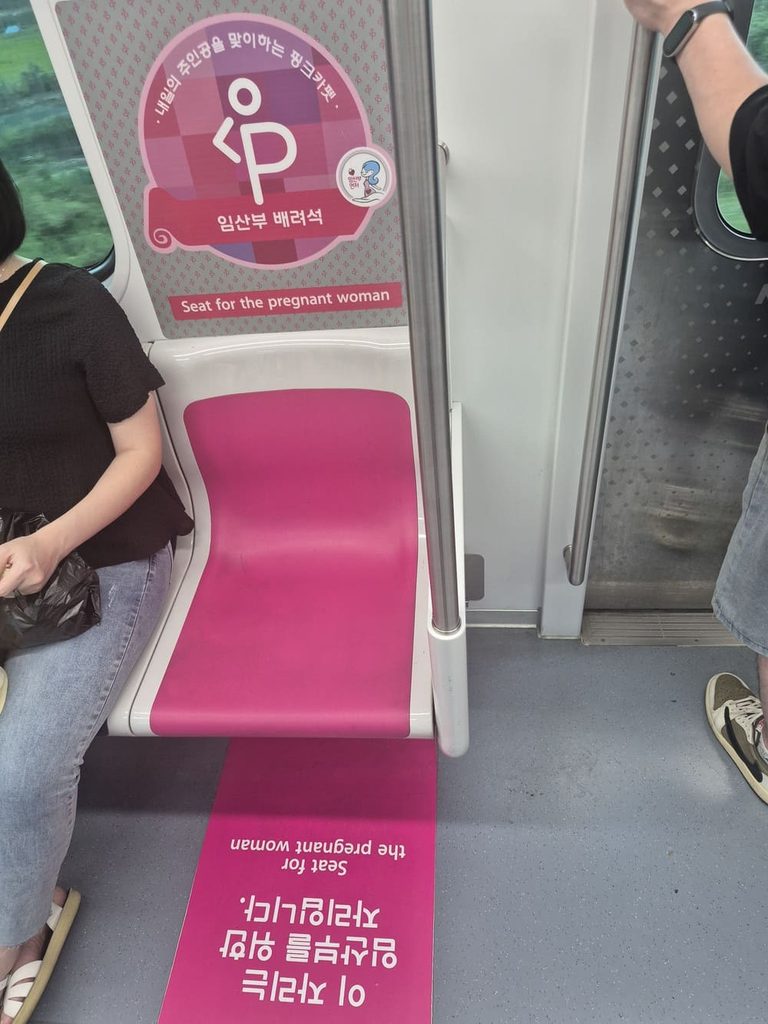
- 💺 Yielding Priority Seats: The ‘Priority seats’ at both ends of the train are reserved for the elderly, disabled, and passengers with young children. While it is technically allowed to sit there if the seats are empty, in Korea, they are usually left open even when the train is completely packed, ensuring that passengers in need can use them comfortably at any time. The pink seat (priority seat for pregnant women) at the ends of regular seating rows follow the exact same etiquette, so please keep this in mind.
- 🚫 Strictly No Food or Drinks: Water bottles with tightly closed caps are fine, but bringing open beverages or food on board is restricted. Eating inside the train is also strictly prohibited.
- 🎒 Backpacks on the Front in Crowded Trains: In a packed train, wearing a large backpack on your back causes great inconvenience to people around you. Please hold your bag on your front or put it down by your feet.
- 🤫 Keep Conversations and Phone Calls Quiet: The inside of Korean subways is generally very quiet. Please refrain from loud conversations or phone calls.
2. Too Cold in Summer? Look for the ‘Car with weak air conditioning’
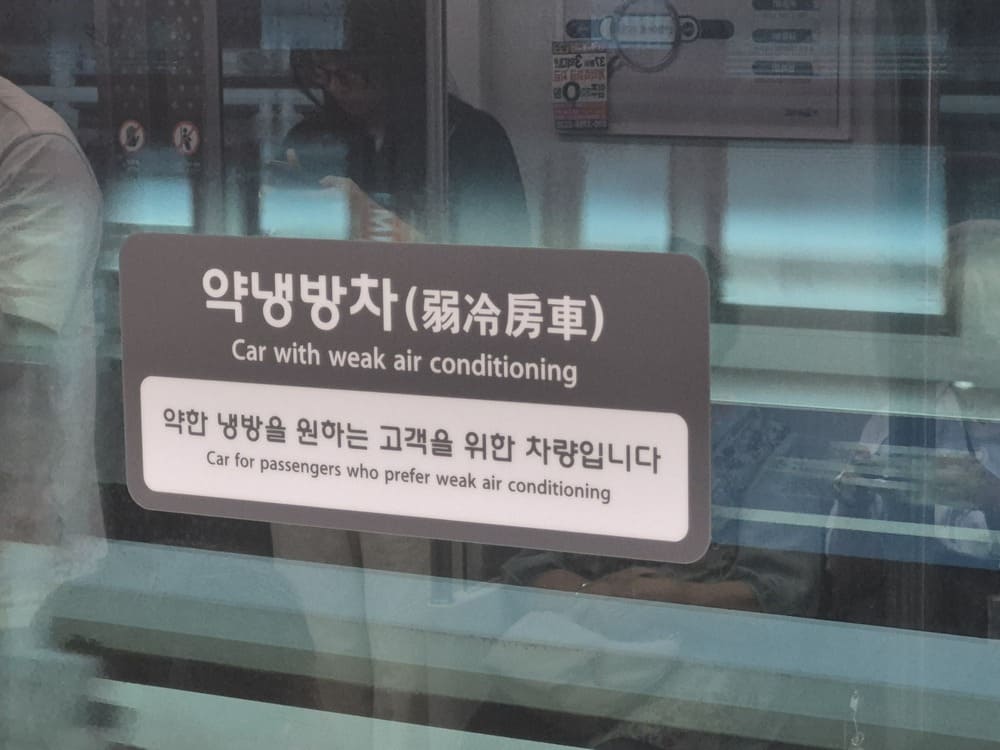
During summer (June to September), Korean subway air conditioners are very powerful, and if you are wearing short sleeves, it might feel freezing cold.
If you easily feel cold, use the car with weak air conditioning. The temperature is set 1 to 2 degrees Celsius higher than regular cars. These are usually located in the 4th to 7th cars in the middle of the train, and there are sticker signs reading ‘약냉방차’ on the screen doors or platform floors.
(🚨 Note: Lines 2 and 9, which are the most crowded, do not operate these cars.)
3. The Magic of Naver Map: ‘Fast Transfer & Exit’ Door Numbers
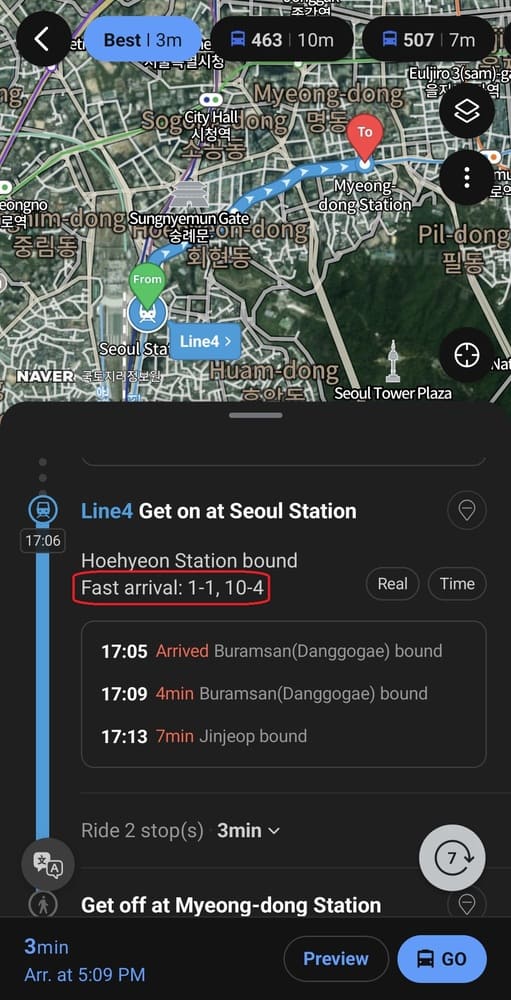
Seoul subway lines frequently overlap, making transfer stations incredibly large and complex. However, if you use the Naver Map app, you can utilize ‘fast transfers’ and ‘fast exits’ that significantly reduce your walking time.
As introduced in [🔗 Part 5: Essential Naver Map Guide], when searching for a route, numbers like [Fast transfer 5-4] or [Fast arrival 3-1] will be displayed.
💡 The Secret of Fast Transfer Numbers
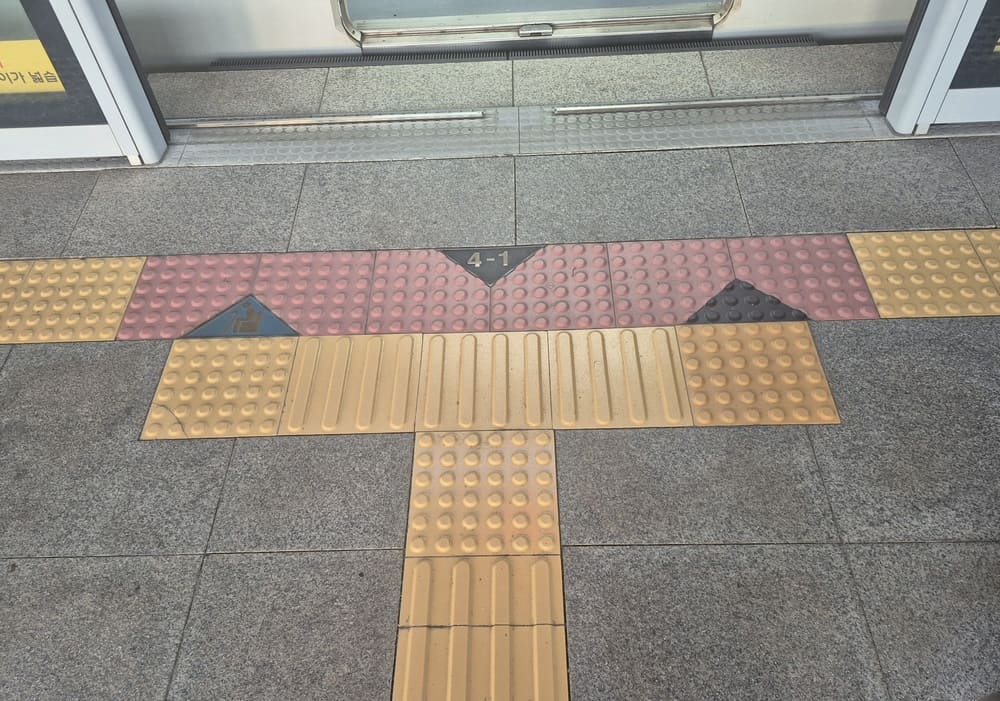
These numbers are written on the platform floor and indicate the [Train Car Number – Door Number] Find this number (e.g., 5-4) on the screen door glass or floor and stand in front of it to board.
When you arrive at your destination and the train doors open, you will experience the magic of having the transfer hallway or exit stairs waiting right in front of you.
The biggest advantage of this feature is that you don’t have to wander around in complex transfer stations. If you just follow the path presented right in front of you when you get off, it is designed to naturally lead you to the next line. Be sure to use this ultimate tip to relieve all worries about getting lost!
4. The Golden Rule for ‘Transfers’ in Complex Stations
Do you need to get off the train and transfer to another line? Don’t panic among the massive crowds and complex hallways; just remember one simple rule.
🌈 Follow the ‘Transfer Band’: There are thick colored lines (bands) and arrows painted on the ceiling signs, walls, or floors matching the unique color of the line you are transferring to. Ignore everything else and just follow that ‘colored line’ to the end, and you will reach the platform for your next train.
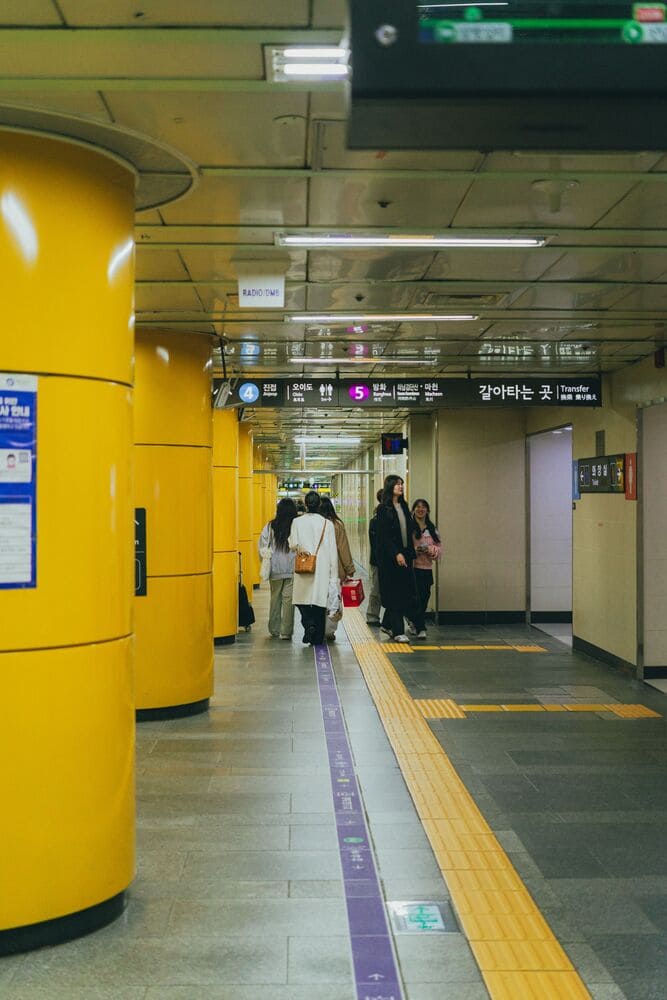
5. Don’t Panic When Nature Calls! Subway Restrooms
Korean subway restrooms are pleasant, safe, and free to use. Toilet paper is also usually provided, so you can use them with peace of mind.
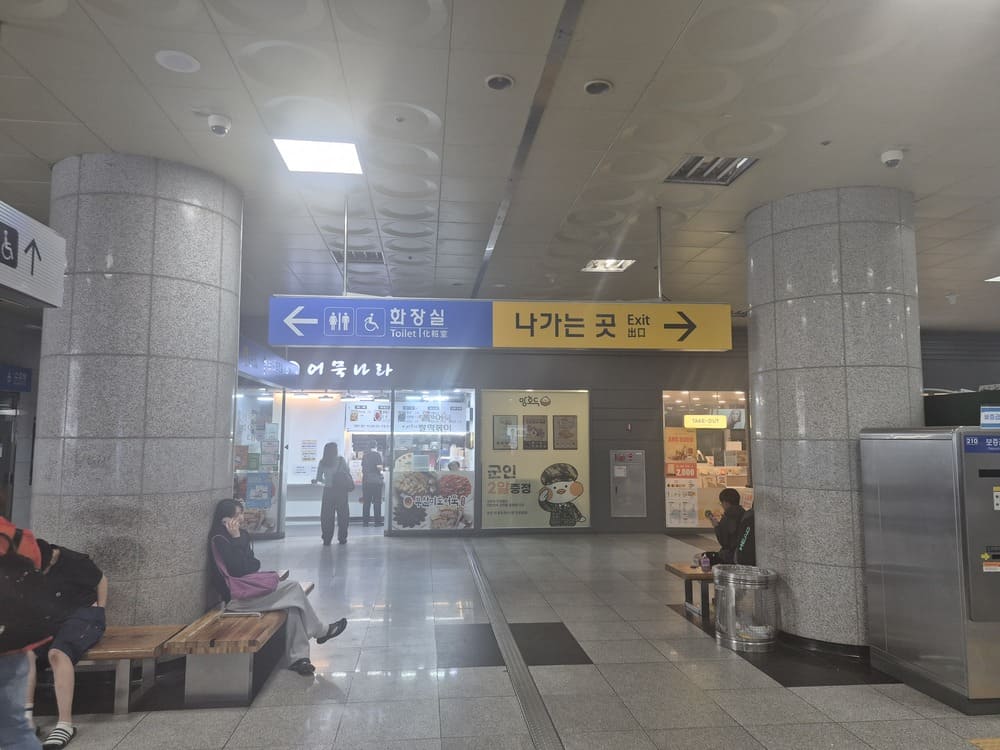
- 📱 Check in Advance with Naver Map: If you search for a subway station on the Naver Map app, detailed information shows whether the restroom is ‘Inside the fare gates’ or ‘Outside the fare gates’. If you need to use the restroom while moving, it is recommended to get off at a station where the restroom is inside the gates.
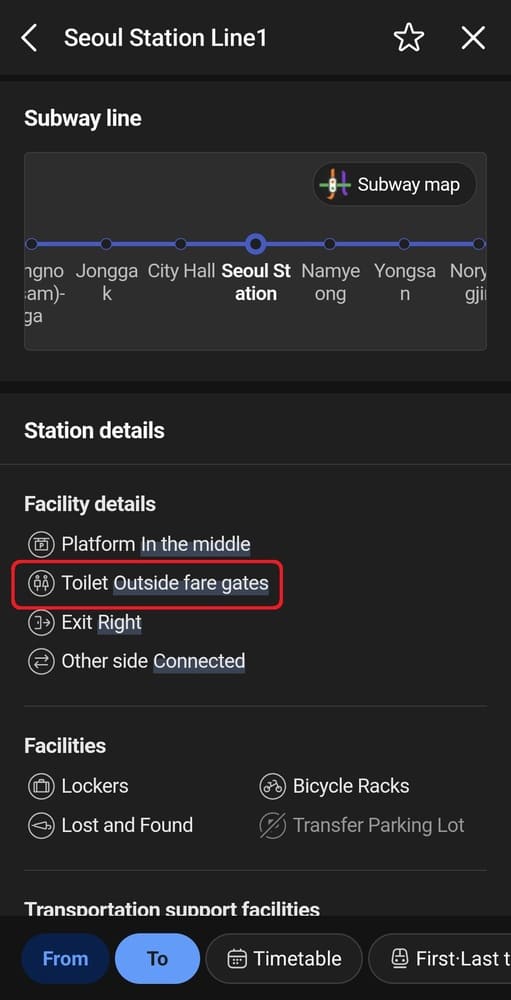
- 🏃♂ What if it’s Urgent and the Restroom is Outside?: If it is extremely urgent and the restroom is outside the gates, simply tag your transit card, pass through the gates, and use the restroom. If you tag your card again and re-enter within 15 minutes, a 15-minute free re-entry rule applies, processing it as a natural transfer without extra charges. (Note: This does not apply to single journey tickets.)
6. Getting Your Single Journey Ticket Deposit Refund
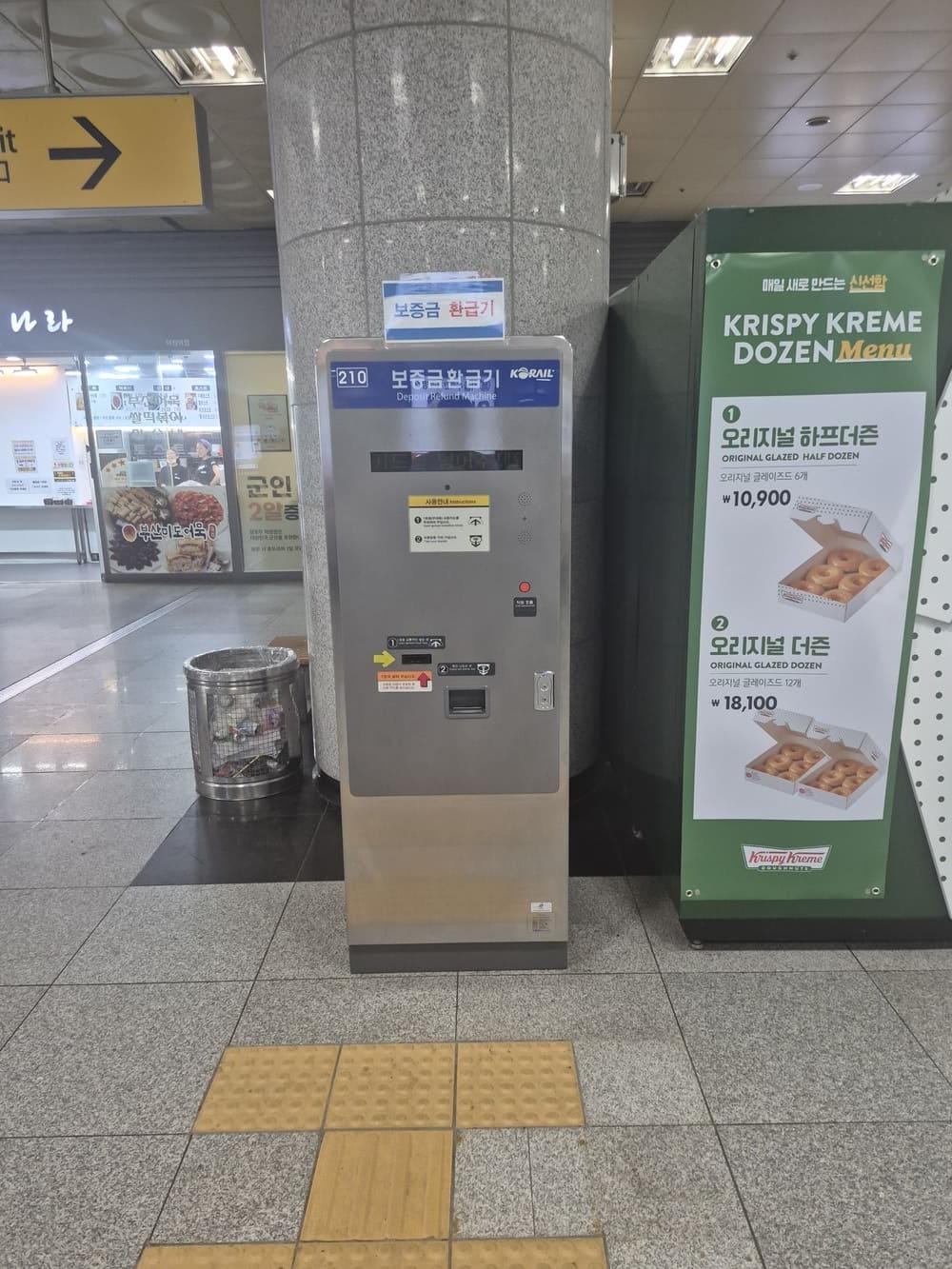
Did you purchase a ‘Single Journey Ticket’ to ride? Once you arrive at your destination and pass through the fare gates, there is a ‘Deposit Refund Device’ installed near the gates. Please use it to get your 500 KRW deposit back.
7. Escaping the Underground Maze! How to Find the Perfect Exit
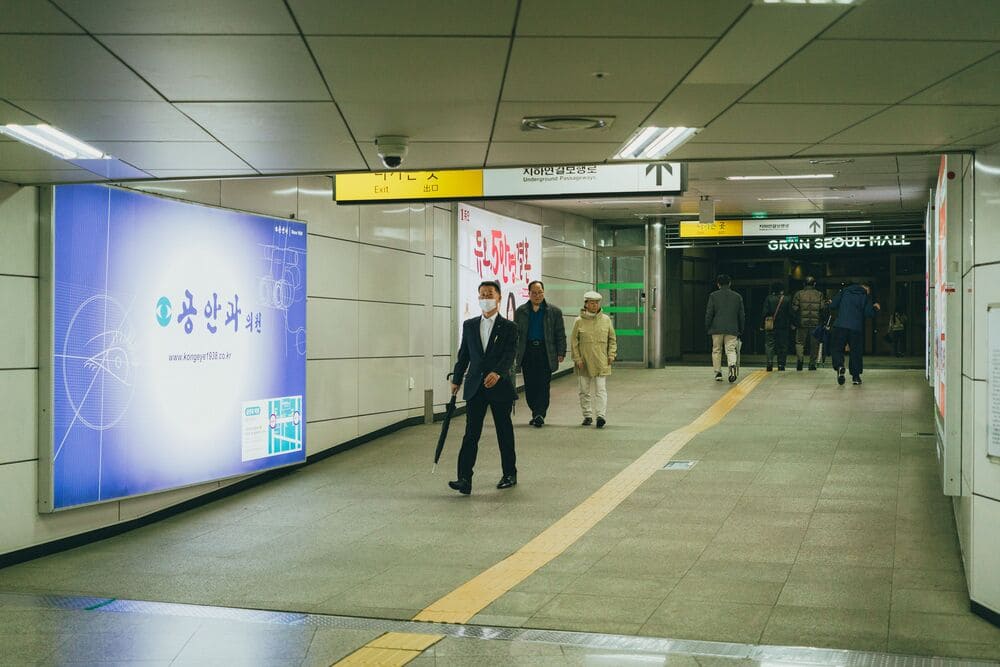
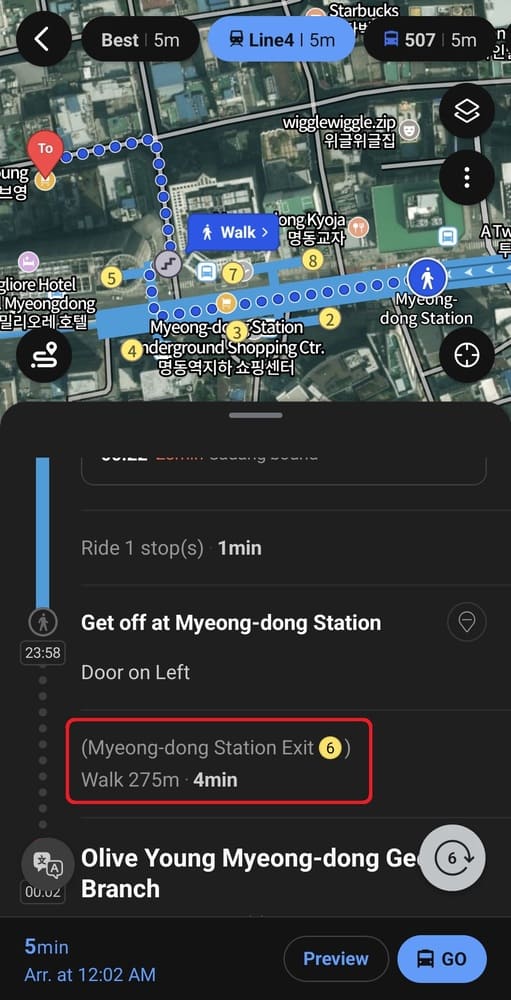
Major stations like Myeongdong, Gangnam, COEX (Samseong Station), and Hongdae are connected to massive underground shopping malls, sometimes having 10 to 20 exits. If you go out through any random exit and try to find your way above ground, you might get blocked by huge intersections without crosswalks and wander for a long time.
- 🔍 Check the Exit Number First: Before getting off the train, check Naver Map in advance to find the exit number(e.g., Exit 4) closest to your destination (hotel, tourist attraction).
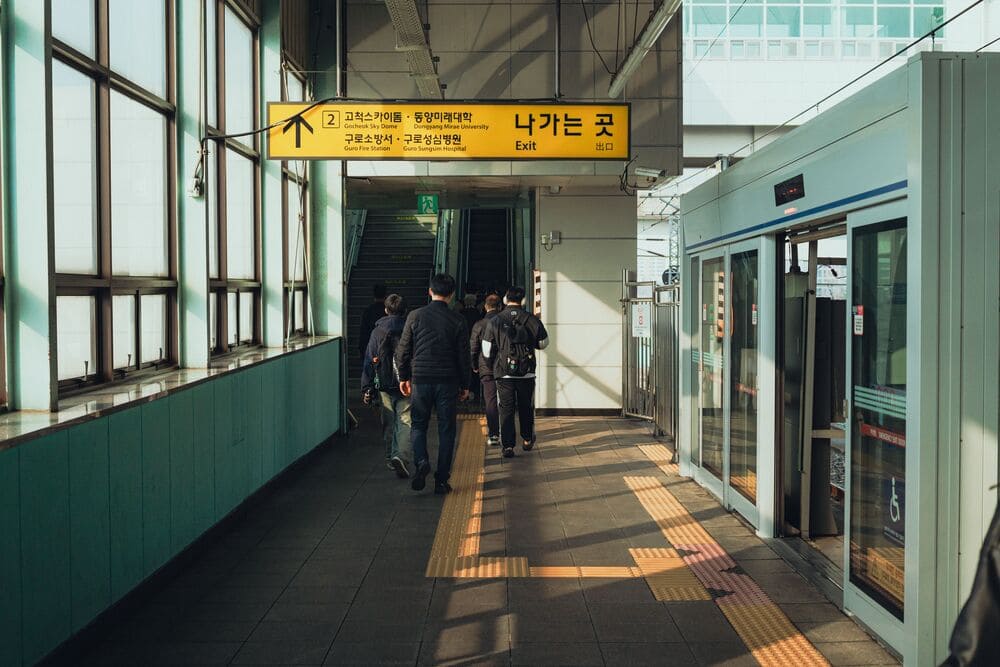
- 👀 Find the Exit via Ceiling Signs: Once you have confirmed the exit number, you need to find the exit you should take. Directional signs (yellow) guiding to exits are usually on the ceiling. Follow the exit number arrows written on these ceiling signs.
8. Useful Bonus Survival Tips
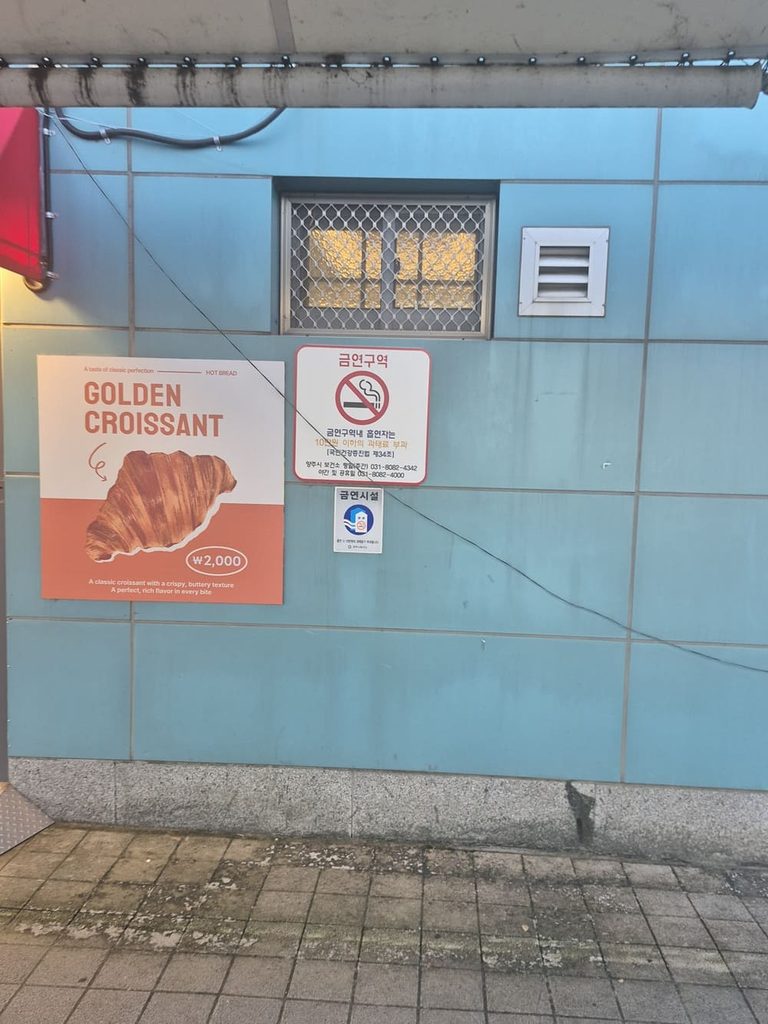
- 🚭 Absolutely No Smoking Around Exits!: The areas near all subway station exits in Korea (within a 10m radius) are designated as non-smoking zones. If caught, a fine of 100,000 KRW can be imposed, so be sure to smoke only in designated smoking areas.
- ❌ Beware of Illegal Vendors Inside Trains: Occasionally, there are people selling goods from carts inside the trains. Although it has decreased recently, this is strictly illegal. If you buy something out of curiosity because it looks cheap, be careful, as you will absolutely not be able to get an exchange or refund even if you discover defects later.
👉 Next UP: Did you safely escape the complex subway maze? Now it is time to officially walk the streets of Korea. From dealing with delivery motorcycles on the sidewalks to crosswalk stories, we continue in [🔗 Part 11: Pedestrian Survival Guide – Surviving the Streets of Korea]. Stay tuned!