
Are you planning a trip outside of Seoul to charming regional cities like Busan, Gyeongju, or Jeonju? Or do you need to head to Busan using the multi-city flight ticket introduced in [🔗 Part 1. Flight Booking: Incheon (ICN) vs. Gimpo (GMP) and Utilizing Busan (PUS)]?
In this post, we’ve packed only the essential information you need before boarding, from the complex types of trains and precautions when booking, to useful onboard facilities.
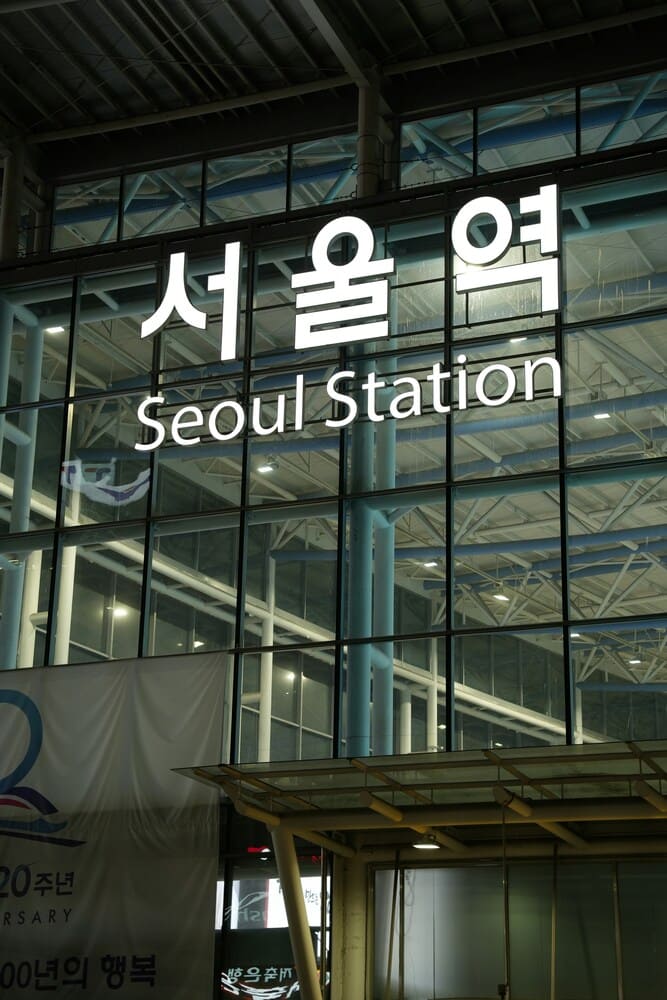
1. KTX the Only Option? A Complete Guide to Korean Train Types
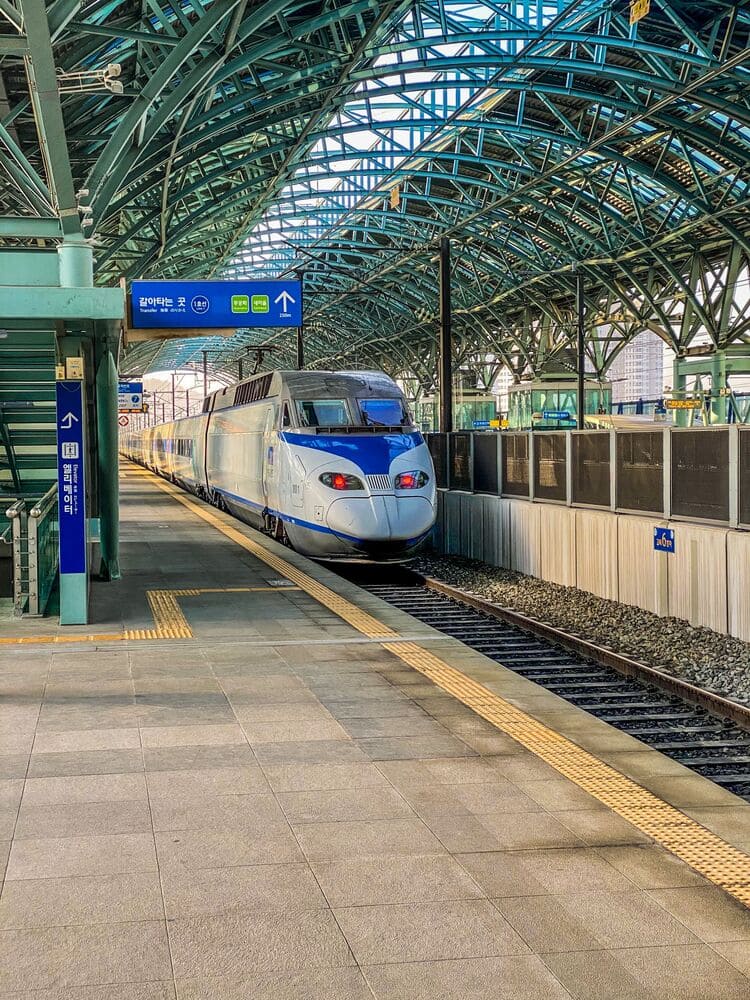
When you visit booking sites, the various train names might confuse you. Trains in Korea are largely divided into two categories based on speed: ‘High-Speed Trains’ and ‘Regular Trains’. Simply put, high-speed trains only stop at major hubs to get you to your destination as quickly as possible, while regular trains make more frequent stops at various stations.
- 🚄 High-Speed Trains (KTX / SRT): Running at 300 km/h, these are the fastest trains in Korea, drastically reducing travel time for long distances. KTX mainly departs from ‘Seoul Station’ and ‘Yongsan Station’, while SRT departs from ‘Suseo Station’ located in the Gangnam area. You can book your ticket by considering which station is closer to your accommodation.
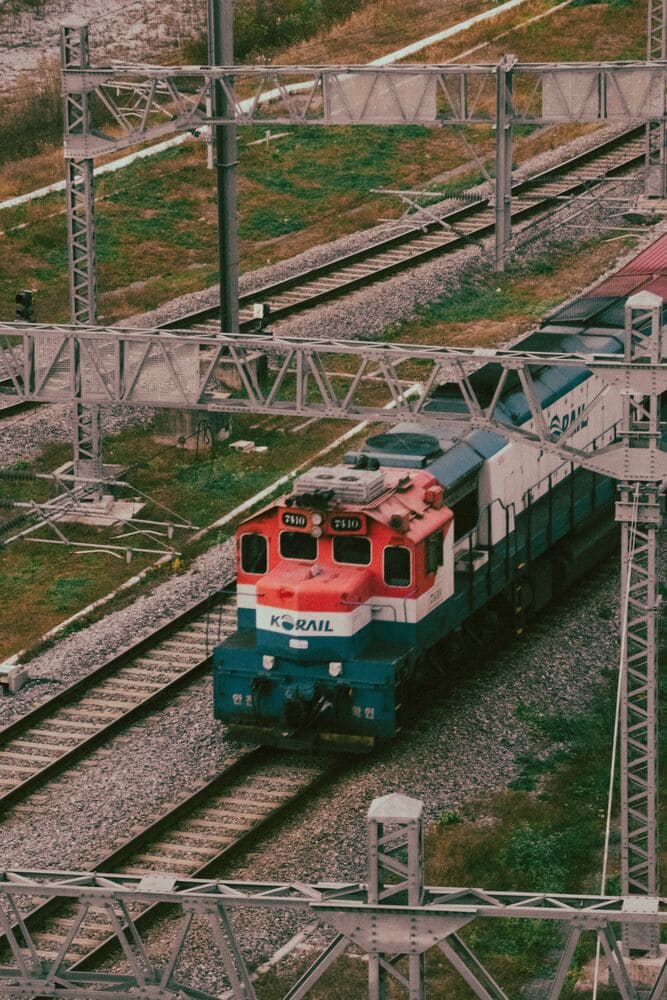
- 🚞 Regular Trains (ITX-Saemaeul, Mugunghwa): Although slower than high-speed trains, tickets are cheaper, and they stop at a wider variety of stations, including those high-speed trains skip. If your destination doesn’t have a high-speed train station, you will use a regular train.
2. Things to Keep in Mind When Booking Train Tickets
- 🗓 Book Weekends and Holidays in Advance: Train ridership is high from Friday afternoons through weekends and holidays. Tickets for popular times often sell out 1-2 weeks in advance, so if your itinerary falls on a weekend, we highly recommend finalizing your plans and booking early.
- 🛑 Beware of Buying Tickets on the Day at the Station: If you think, “I’ll just buy it at the station on the day of travel,” you might find all seats completely sold out, or you might have to travel standing (standing-room ticket) all the way to your destination.
- 💳 Use Global Booking Agencies for Payment Errors: Many tourists report foreign credit card payment errors on the official website or app. Booking on the Korail website only accumulates member points with no extra discounts, so we recommend using global booking agency platforms where foreign payments process smoothly.
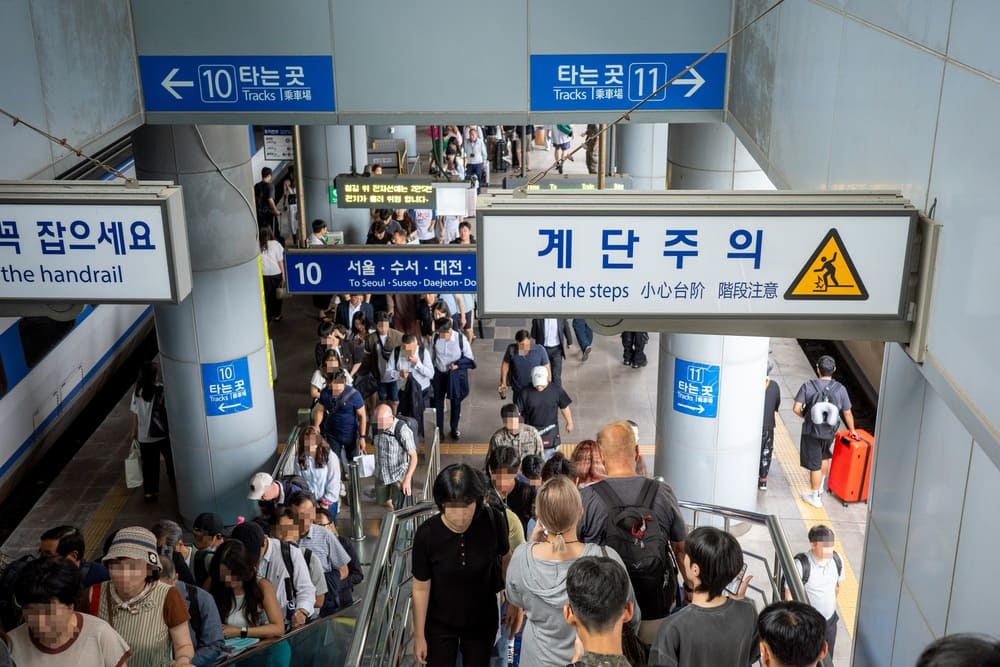
⚠️ Note Before Booking: Differences in Checking Your Track (Platform)
Unlike airplanes, train boarding tracks in Korea are not determined in advance and are confirmed about 15 minutes before departure. This is especially important at large stations like Seoul Station, which has many tracks, so checking it on time is crucial.
- 📱 Official App (Korail Talk): You can conveniently check your departure track before boarding. Once on the train, it is highly useful as you can track your real-time location and estimated time of arrival.
- 🌐 Global Agencies: They do not sync with the app, so you have the slight inconvenience of manually checking the departure information boards in the station waiting room on the day of travel.
Choose the booking method that better suits your travel style: payment convenience (agency) or boarding day convenience (official app)!
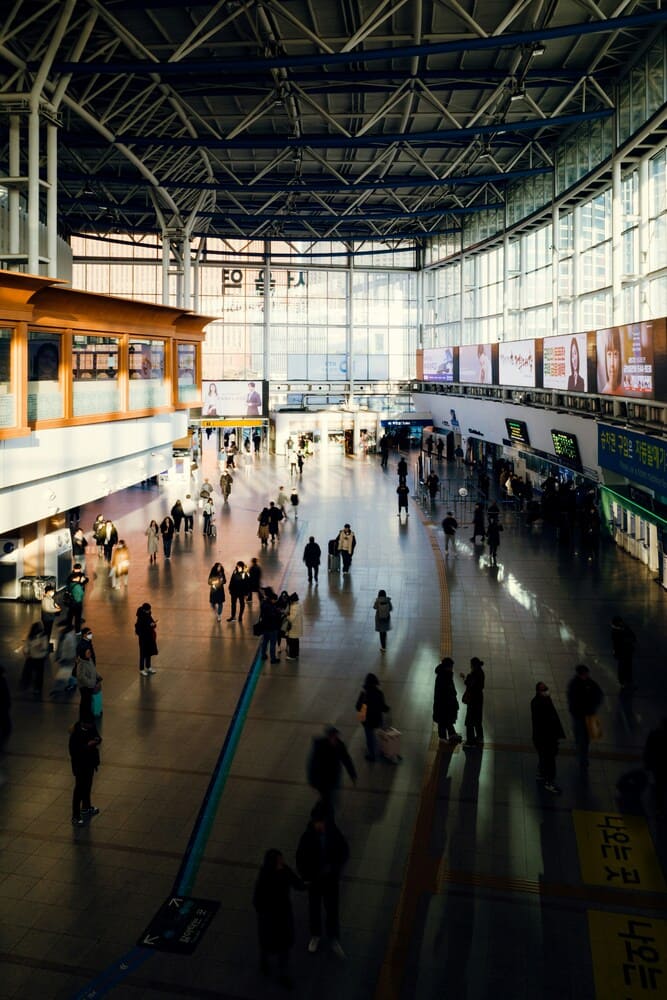
3. “Snag the Best Seat!” How to Use the Korail App’s ‘VR View’
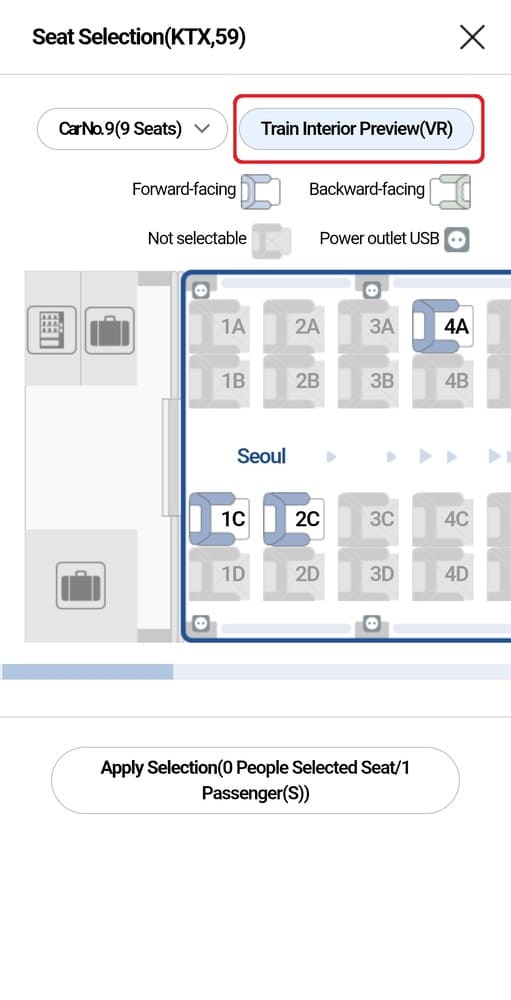
Even if you pay through a global booking agency, we highly recommend using the official Korean railway app, ‘Korail Talk’, to check seat layouts. Even if you don’t book (pay) directly on the app, anyone can check the train’s interior VR view for free by searching for a train and clicking the ‘Select Seat’ button.
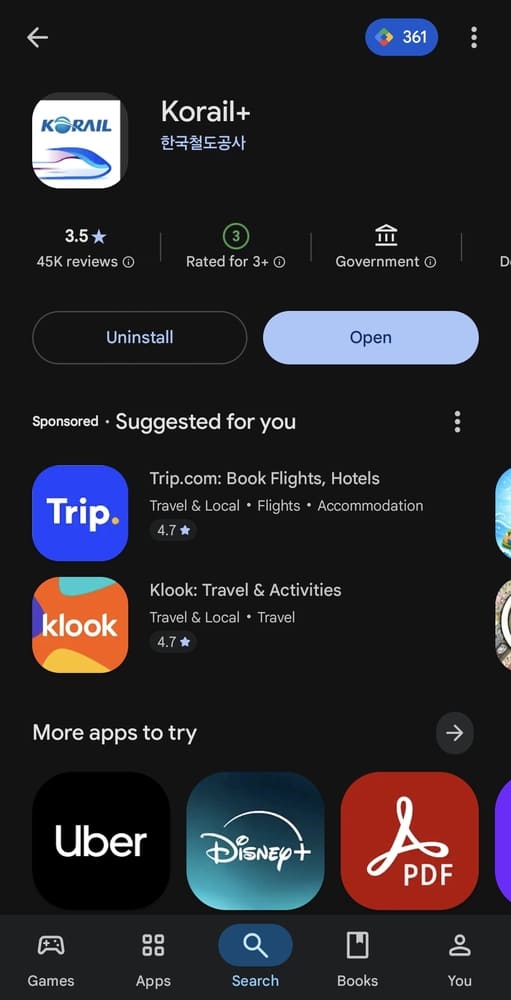
[📷 Source: Google Play Store]
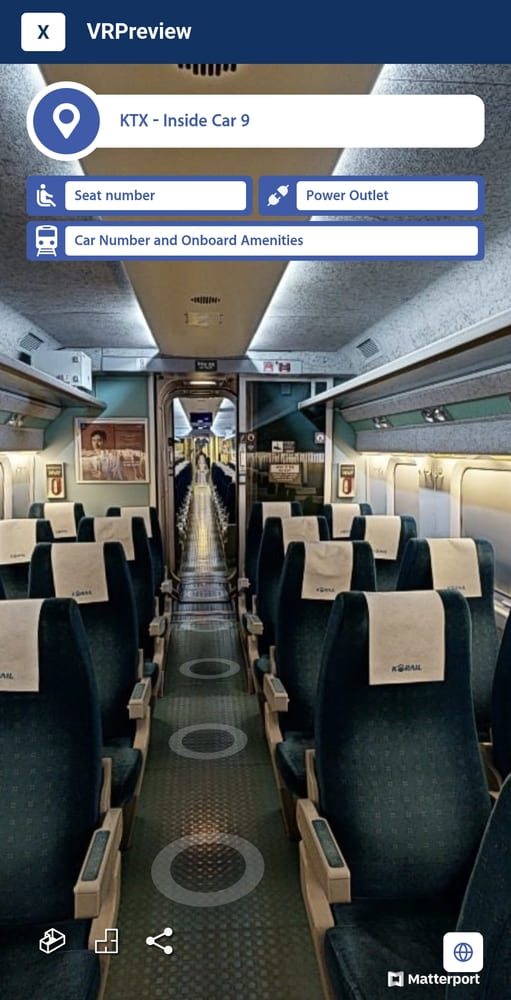
- 📱 Preview the Cabin Interior (‘VR View’): The Korail app lets you preview the inside of the train in 3D. Korean trains do not have luggage racks between every single car; spaces are divided for restrooms, vending machines, etc. Therefore, before booking, use this feature to visually confirm where the closest large Luggage Rack is, whether there’s a power outlet next to your seat, and where the restrooms are located so you can secure the perfect spot.
4. Useful Onboard Facilities to Know (Wi-Fi, Outlets, Nursing Rooms, etc.)
Although locations or layouts may vary slightly depending on the type of train you board (KTX, KTX-Sancheon, SRT, etc.), here are some major onboard facilities useful for travelers.
- 📶 Free Wi-Fi: All high-speed trains in Korea (KTX, SRT) offer free Wi-Fi. You can save your mobile data throughout the trip just by selecting the network (e.g., KTX-WiFi) and clicking the connect button without needing a separate password.
- 🔌 Smartphone Power Outlets: Charging your phone during a trip is essential! SRT and the newer KTX (Sancheon) models have power outlets under every seat. However, older regular KTX models only have outlets on the wall between the windows. Therefore, make sure to check if there’s an outlet next to your seat using the ‘VR View’ introduced in section 3.
- 🍼 Nursing Rooms and Diaper Changing Stations for Families: If you are traveling with young children, don’t worry. There are nursing rooms equipped with diaper changing stations between KTX and SRT cars. Using the ‘VR View’ to locate the nursing room beforehand and booking the closest train car will make for a much more comfortable journey.
- 🍱 Can I Eat Food on the Train?: Yes, you can! You are free to bring food onto Korean trains. You can comfortably sit in your seat and eat sandwiches or coffee purchased at the station. However, there is no dining car inside the train; there are only vending machines selling bottled water and simple snacks in the passageways between cars.
👉 Next UP: Are you completely ready with your train booking and seat selection? In the following [🔗 Part 13. Korea Train Boarding Manual: No Ticket Gates & Luggage Storage Hacks], we will dive into what happens after you arrive at the station, detailing the ticketless gate rules and local hacks for safely storing large suitcases!