Do you want to leave Seoul and travel to beautiful small towns or hidden gems in Korea during your trip?
Previously in 🔗[Part 12. Preparing for a Korean Train Trip: From Train Types to Seat Booking Tips] and 🔗[Part 13. Practical Guide to Boarding Korean Trains: Stations Without Ticket Gates & Luggage Storage], we explored how to use the train system in Korea. However, railway networks do not cover every single region of South Korea. There are many cases where trains don’t reach, or the train stations are located too far from the city center, making the journey more cumbersome.
In these situations, the fastest and most excellent alternative is Korea’s Express Bus system. In this guide, we will provide you with a detailed know-how on using express buses, covering everything from finding the terminal and booking tickets, to boarding and practical precautions.

1. Why Take an Express Bus? (To Places Trains Can’t Reach)
For long-distance travel, trains are arguably the first mode of transport that comes to mind in terms of speed and convenience.
However, for Sokcho, where the beautiful East Sea and Seoraksan Mountain await, trains don’t reach. For Jeonju, the city of gastronomy, trains do pass through, but the KTX station is located on the outskirts rather than the city center or major tourist spots, so using the bus terminal is often much more advantageous.
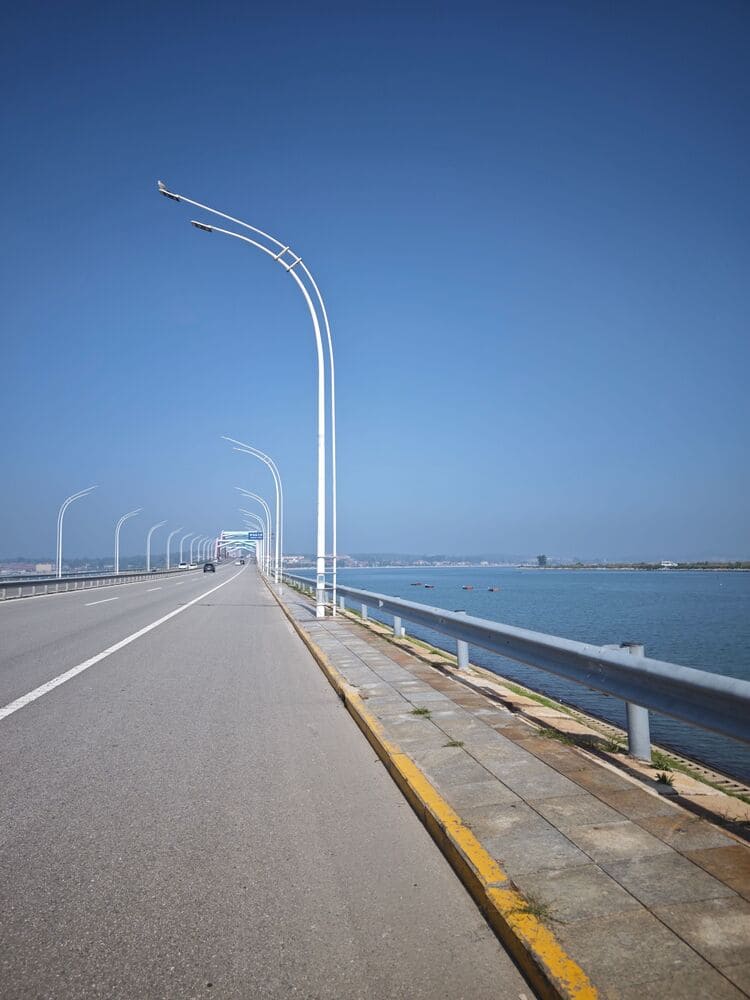
Being able to travel at much cheaper prices than the KTX is also a huge advantage. If you want to enjoy the pleasant scenery of Korea’s highways, it can be the best choice.
2. Express Bus vs. Intercity Bus, What’s the Difference? (And Seat Classes)
Korea’s long-distance buses are broadly divided into two types based on their destinations and operating methods: ‘Express Bus’ and ‘Intercity Bus’.
- 🚌 Express Bus: The Convenience of Direct, Non-Stop Travel
These are direct (non-stop) routes connecting major cities via the shortest path without any layovers]. They run non-stop to the destination via highways, and are divided into three classes (Economy, Excellent, Premium) depending on the comfort of the seats.
- 💺 Economy: A standard bus with 4 seats per row (2-2 layout). It offers the best value for money.
- 🛋️ Excellent: With 3 seats per row (2-1 layout), it provides a much wider space and the seats recline deeply. It is the most universally recommended class for long-distance travel.
- 🛏️ Premium: A top-tier bus where you can lie completely flat just like in airplane business class.` Personal monitors, wireless charging pads, and privacy curtains are provided.
- 💺 Economy: A standard bus with 4 seats per row (2-2 layout). It offers the best value for money.
- 🚐 Intercity Bus: The Core of Local Travel Reaching Every Corner
These routes connect like a spider web to small and medium-sized cities and county-level regions. Unlike express buses, they often stop at several layovers during the journey, so it takes a little longer, but they reach deep into local destinations where express buses don’t go.
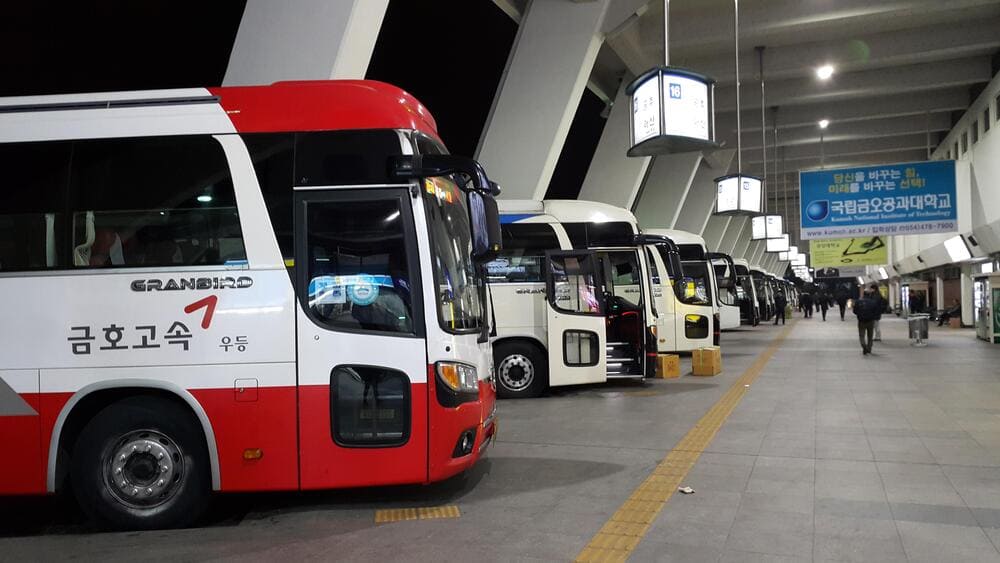
💡 Unified Guide Terminology: Express buses and intercity buses only differ in their routes; the methods for using the terminals and boarding are almost identical. Therefore, in this guide, we will unify the terminology and refer to them simply as the ‘Express Bus’, which is a more familiar term.
3. Tips for Stress-Free Bus Booking (Website over App!)
Koreans mainly use bus booking apps (like T-money GO), but smartphone apps require mandatory ID Verification through a Korean telecom company and do not support English.
Therefore, you must use the official English websites via a smartphone browser or PC, not the apps. It is much more convenient because they allow international credit card payments as a Guest without a complex sign-up process.
🌐 Official English Booking Websites:
- Express Bus Booking: KOBUS (kobus.co.kr)
- Intercity Bus Booking: TxBus (txbus.t-money.co.kr)
- 🌐 Intuitive English Booking System: Official websites like KOBUS fully support English. By entering your departure, destination, and date, you can check the timetables and remaining seats by bus class at a glance, and directly select your preferred seat while looking at the interior layout of the bus.
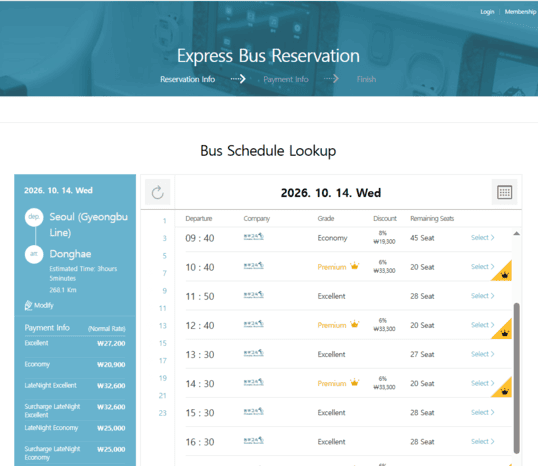
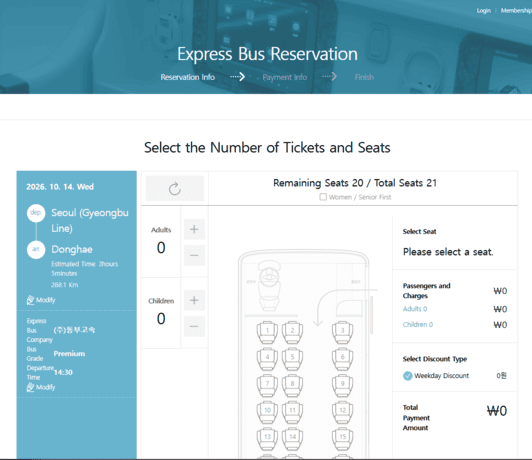
(📷 Caption: Actual booking and seat selection screens via the KOBUS official English website)
- 💳 If your international card is rejected: Just like with train bookings, your international credit card might occasionally be declined due to Korea’s payment security system. In this case, don’t panic; try arriving early at the terminal ticket counter to purchase a ticket in person.
- 🎫 Smart Boarding (Ticket Issuance): Once you finish booking on the website, take a screenshot of your Reservation Number and bring the physical credit card you used for payment to the terminal. You can easily print your paper ticket from the Kiosk using your payment card, and you can also issue it using your Reservation Number and the phone number you entered during payment.
🚨 Advance Booking is Essential (Weekends & Holiday Seasons):
Especially during weekends, summer vacations, and major holiday periods, tickets for popular routes sell out in an instant. If your schedule is confirmed, it is safest to secure your tickets in advance through the website.
4. Terminal Practical Guide: From Arrival to Boarding (Step-by-Step)
When heading to the Seoul Express Bus Terminal or Central City Terminal, it is best to use Seoul’s subway network (Express Bus Terminal Station on Lines 3, 7, and 9). However, Seoul’s major bus terminals are connected to massive shopping malls and can be very complex, so it is highly recommended to arrive at least 20 minutes before departure.
Once you arrive at the terminal and safely issue your ticket, follow the steps below to board the bus.
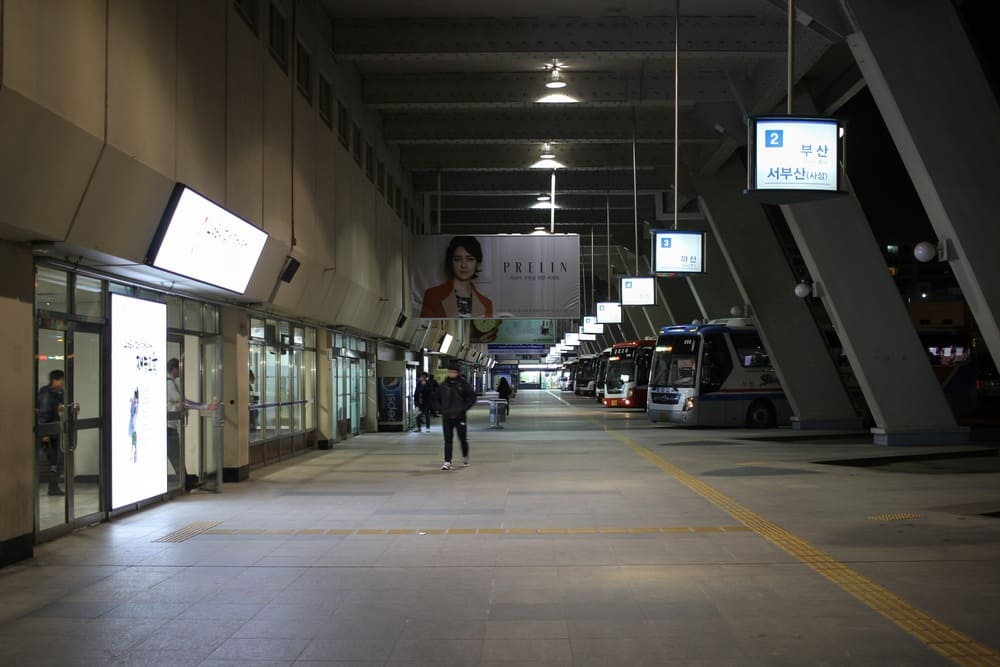
- 🎟️ Step 1: Check Ticket Information (Platform and Seat)
Check the platform number and seat number on your printed paper ticket.
- 🚶♂️ Step 2: Find Your Platform
Follow the signs inside the terminal to find the platform number written on your ticket. Once you arrive at the platform, double-check the destination through the LED sign or placard on the front window of the waiting bus just to be perfect.
- 📱 Step 3: Board the Bus and Scan Barcode
You don’t show the ticket to the driver; instead, directly scan the barcode (or QR code) on your paper ticket on the Scanner located right as you step onto the bus.
- 💺 Step 4: Take Your Assigned Seat
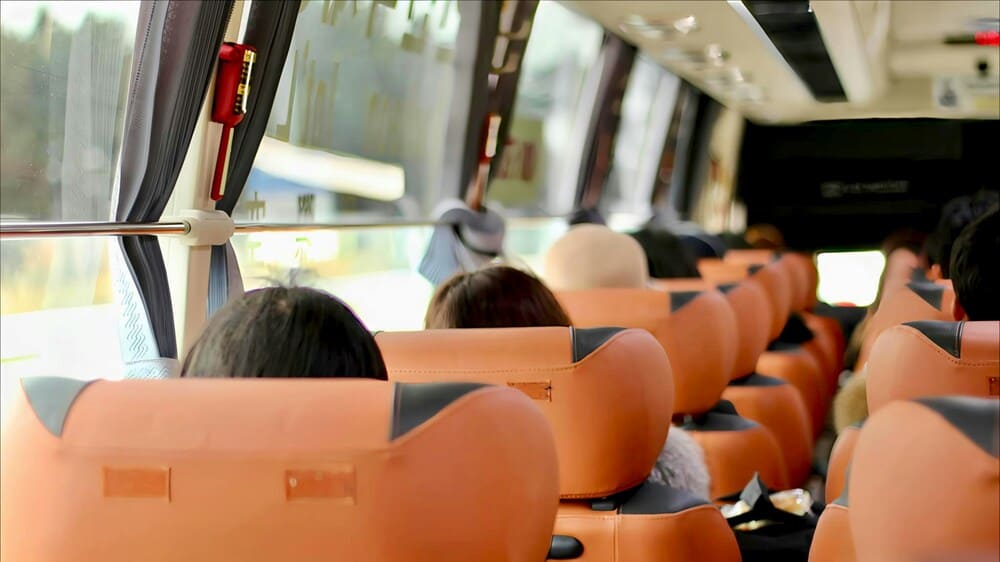
Korea’s express buses operate 100% on a reserved seat basis. Find the number written on your ticket (e.g., #12) and take a seat. Seat numbers are usually located on top of the headrests or on the overhead racks near the windows.
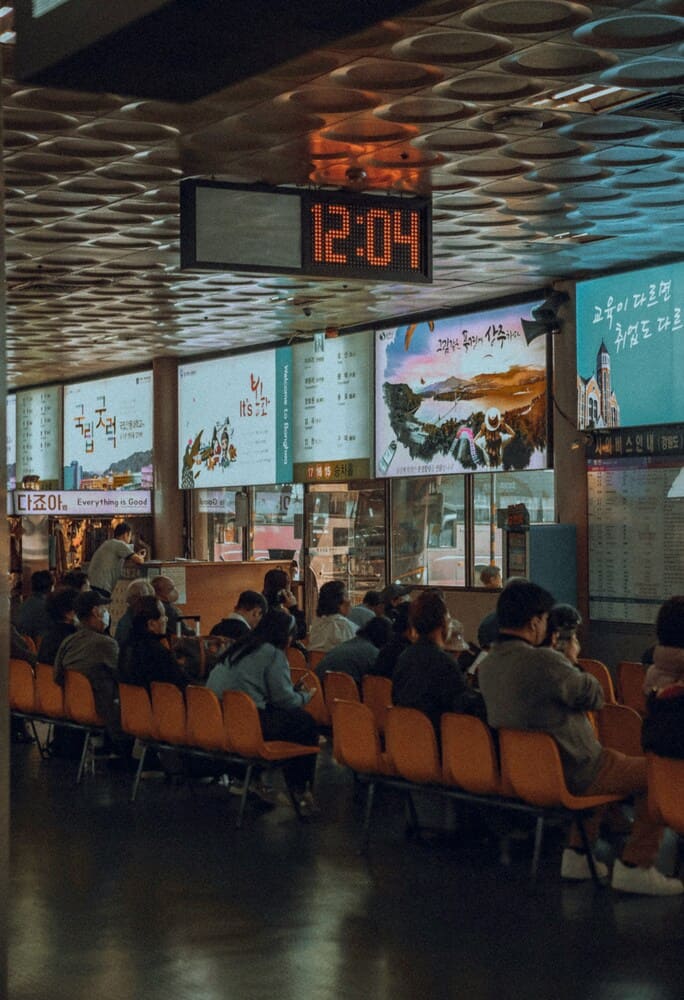
5. Practical Precautions & Tips Easy to Miss
- ❌ No Public Transit Transfer Discount: The ‘free transfer discount’ benefits of the transportation card (Tmoney, etc.) you used on city buses or subways do not apply to express buses. You must pay for the bus ticket entirely separately.
- 🌭 Highway Rest Area Time: One of the great joys of long-distance travel is stopping at a highway rest area for 10 to 15 minutes halfway through the journey. Since there are no restrooms inside the buses, use the restroom when you arrive at the rest area, and use the remaining time to enjoy some delicious Korean street food like hot dogs or walnut pastries (Hodu-gwaja).
🚨 Critical Precaution (Strict Punctuality): When you go to the restroom or buy snacks at the rest area, the bus will leave without exception once the designated time is up. They do not wait long for passengers, so you must strictly keep an eye on the time.
6. Boarding Etiquette & Essential Safety Rules for a Pleasant Journey
- 🤫 Basic Boarding Manners: Please avoid bringing in cups without lids (like takeout coffee) and eating strong-smelling foods. Also, since many passengers rest during the trip, please use earphones when watching videos, and when reclining your seat, be considerate of the person behind you by adjusting it slowly and gently.
- ✅ Wear Seatbelts in All Seats (Legal Obligation): This is the most important rule to keep in mind when taking an express bus. Because Korean buses travel at high speeds on the highway, wearing a seatbelt in all seats is strictly mandatory by law. Please put on your seatbelt first as soon as you sit down in your seat.
👉 Next UP: Did you arrive safely at your destination while enjoying the romantic scenery on the bus? In the next guide, 🔗[Part 15. Korea Taxi Guide: Using Apps & Avoiding Overcharges and Surcharges], we will guide you on how to travel most comfortably and stress-free from the bus terminal to your hotel or tourist attraction! Stay tuned!